Choosing the best Sport Shirt suppliers in 2026 requires more than comparing catalog prices. Global buyers need dependable factories, verified materials, stable production, and clear communication. A supplier may offer recycled polyester, moisture-wicking mesh, or UV-protective fabric, yet performance claims still require testing. Ask for fabric composition, laboratory reports, production samples, and recent quality records.
Dr. Sheng Lu, a respected textile and apparel industry researcher, emphasizes, “Sourcing is not only about price; it is about capability, consistency, and trust.” This principle matters when evaluating Sport Shirt manufacturers across Asia, Europe, and other production regions. Experienced suppliers should explain minimum order quantities, sample timing, decoration options, inspection procedures, and shipping plans without hiding important conditions.
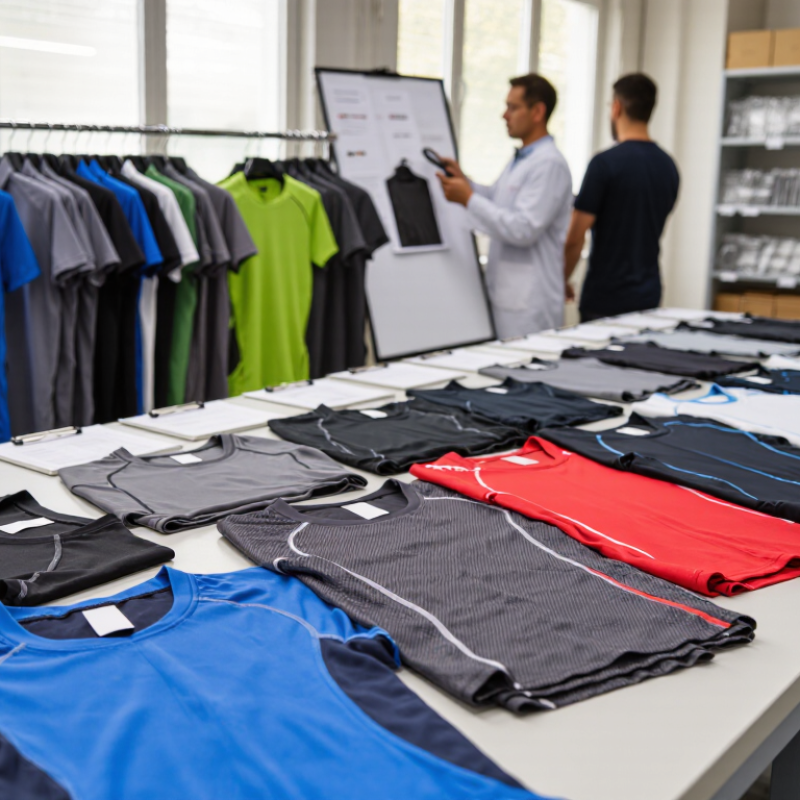
Details reveal competence. Look closely at collar recovery, seam strength, printing edges, size tolerance, and color consistency after washing. Request a pre-production sample. Test it personally. A shirt that feels light in a showroom may cling during intense training. That difference matters.
However, no supplier list is perfect. Rankings can change quickly because of material costs, factory capacity, transport delays, or changing buyer requirements. Some factories communicate well but lack flexible customization. Others provide advanced equipment but struggle with smaller orders. Buyers must reflect on their own priorities, not follow a popular name blindly.
This guide reviews leading Sport Shirt suppliers for global buyers in 2026. It considers product quality, manufacturing experience, customization, compliance practices, communication, order flexibility, and long-term reliability. The goal is practical sourcing confidence, not unrealistic promises. Verify every important claim before signing a purchase agreement.
A leading sport shirt supplier in 2026 combines manufacturing experience with measurable technical knowledge. Their team should understand fabric weight, moisture control, stretch recovery, colorfastness, and seam durability. These details affect how a shirt performs during training, travel, and repeated washing. Practical experience matters.
Reliable suppliers provide clear fabric specifications, test reports, production samples, and realistic delivery schedules. They explain how each material behaves before accepting a large order. A strong quality system checks fabric rolls, stitching, measurements, printing, and final packing. Traceable records make problems easier to investigate.
Communication also defines professional performance. Buyers need timely updates when yarn availability, capacity, or shipping conditions change. Flexible suppliers can support small test orders before scaling production. However, flexibility should not replace discipline. A supplier may offer impressive samples yet struggle with bulk consistency. This is easy to overlook. Independent inspections and documented approvals reduce that risk.
Responsible production is becoming more important for global buyers. Leading factories should manage wastewater, reduce material waste, protect workers, and provide accurate compliance documents. Claims require evidence, not polished wording. Buyers should review certificates, visit facilities when possible, and compare promised lead times with past performance. Even experienced sourcing teams can miss hidden costs, weak packaging, or late design changes. Careful questions remain essential.
2026 Best Sport Shirt Suppliers for Global Buyers
How to Compare Sport Shirt Supplier Capabilities
Comparing sport shirt suppliers requires more than checking a price list. I examine fabric weight, fiber content, stretch recovery, and moisture management. A 150–180 GSM polyester blend may suit training shirts, while heavier fabric can improve structure. Ask for physical samples, not only digital photographs. Inspect seams, collar shape, print edges, and color consistency under natural light. Small defects often become costly after bulk production.
Production capability matters just as much as fabric quality. Review the supplier’s monthly capacity, minimum order quantity, sample timeline, and peak-season schedule. A capable factory should explain cutting, sewing, printing, embroidery, and final inspection clearly. Request recent quality records, measurement charts, and test reports from qualified laboratories. Confirm whether each production lot receives checks for shrinkage, colorfastness, stitching strength, and size tolerance. Details build confidence.
Communication also reveals operational maturity. Notice how quickly the supplier answers technical questions. Vague replies can signal weak internal coordination. I once focused too heavily on attractive pricing and overlooked an unclear replenishment process. That mistake delayed a repeat order. Now I ask for a production calendar, packaging specification, carton photos, and corrective-action examples. No supplier performs perfectly. A reliable partner admits limitations, documents improvements, and provides evidence before requesting larger commitments.
2026 Best Sport Shirt Suppliers for Global Buyers
Global buyers should treat product standards as purchase controls, not marketing language. Textile Exchange’s Materials Market Report 2024 recorded 124 million metric tonnes of global fiber production in 2023. Polyester represented about 57% of that volume. This scale makes fiber traceability increasingly important. Suppliers should provide composition records, recycled-content evidence, and batch-level documentation. “Moisture-wicking” alone proves very little.
Fabric performance must match the sport and climate. For training shirts, buyers should verify GSM, air permeability, drying time, stretch recovery, and dimensional stability. Colorfastness testing can follow ISO 105 methods. Washing procedures should reference ISO 6330. Pilling performance may be assessed under ISO 12945. A practical sample should survive repeated washing without twisting seams or losing its shape. Small defects become expensive at container scale.
Material safety also deserves formal review. Test reports should cover restricted substances, skin-contact requirements, and factory quality controls. Recycled polyester can reduce reliance on virgin feedstock, but its performance and origin still require verification. The Textile Exchange report also noted that recycled polyester formed only a minority share of total polyester output in 2023. Numbers need context.
A lower quotation is not always cheaper. Weak colorfastness creates returns, complaints, and wasted freight. Suppliers should submit pre-production samples, sealed lab dips, and inspection criteria before bulk cutting. That step feels slow. It is often the most practical protection. Mistakes still happen, especially when buyers approve samples without testing after washing.
| Evaluation Dimension | Recommended Product or Material Standard | Typical Global-Order Target | Relevant Test Method or Reference | Buyer Verification Points |
|---|---|---|---|---|
| Fiber Composition | Specify the exact fiber type and percentage, such as polyester, recycled polyester, cotton, elastane, or blended construction. | Declared composition should normally match the approved specification with a tolerance agreed before production. | ISO 1833 series for quantitative chemical fiber analysis; product labeling rules depend on the destination market. | Check laboratory composition results, care labels, purchase specifications, and recycled-content documentation where applicable. |
| Fabric Weight | Define fabric mass per unit area in grams per square metre (GSM), together with an agreed tolerance. | Common sport-shirt fabrics are approximately 120–220 GSM, depending on climate, opacity, durability, and garment construction. | ISO 3801 or ASTM D3776 for fabric mass per unit area. | Measure samples from multiple fabric rolls and confirm that lightweight fabrics are not excessively transparent or fragile. |
| Moisture Management | Use a fabric construction and finish that supports perspiration spreading, drying, and wearer comfort during activity. | Require documented wicking or drying performance when the shirt is marketed for training, running, or outdoor use. | AATCC TM195 for liquid moisture management; AATCC TM201 may be used for drying evaluation. | Request performance reports for the actual production fabric, not only a development or showroom sample. |
| Colorfastness to Washing | Color should remain stable after the agreed number of home-laundering cycles, with limited staining of adjacent materials. | A common commercial target is color-change and staining grade 4 or better on a 1–5 grey-scale system, subject to product risk and market requirements. | ISO 105-C06 or AATCC TM61; assessment may use ISO 105-A02 and ISO 105-A03 grey scales. | Test dark shades, fluorescent shades, contrasting trims, prints, and garments containing elastane separately. |
| Colorfastness to Perspiration | Colors should resist transfer or fading caused by acidic and alkaline perspiration during repeated wear. | A common buyer benchmark is grade 4 or better for color change and staining, with stricter requirements for high-contact sportswear. | ISO 105-E04 or AATCC TM15. | Include both fabric and finished-garment testing where heat-transfer prints, piping, or multi-color panels are used. |
| Dimensional Stability | Control shrinkage, growth, spirality, and shape recovery after washing and drying. | Many global buyers specify approximately ±3% dimensional change for performance knits, with tighter limits for fitted garments. | ISO 6330 washing and drying procedures with ISO 5077 dimensional-change measurement. | Test body length, chest width, sleeve length, and collar dimensions against the approved measurement chart. |
| Pilling Resistance | Fabric surface should resist formation of pills caused by abrasion during wear and laundering. | A typical commercial requirement is grade 4 or better after the buyer-defined abrasion or laundering cycle. | ISO 12945-2 for modified Martindale pilling evaluation or an equivalent agreed method. | Check high-friction areas such as underarms, side seams, backpack-contact zones, and printed surfaces. |
| Tensile and Tear Strength | Fabric and finished seams should withstand normal pulling, movement, and repeated laundering without failure. | Set minimum values by fabric weight, knit structure, garment fit, and intended activity rather than using one universal value. | ISO 13934-1 for strip tensile strength; ISO 13937 series for tear strength; ISO 13935 series for seam strength. | Review results for the main body fabric, mesh panels, pocket areas, shoulder seams, and side seams. |
| Stretch and Recovery | For fitted or high-mobility shirts, specify horizontal and vertical stretch together with recovery after extension. | The required percentage depends on the pattern and activity; recovery should be verified to prevent bagging at collars, hems, and elbows. | ASTM D2594 for stretch and growth of knitted fabrics or another method agreed in the technical package. | Test fabric direction, repeated extension, and finished garment measurements after recovery time. |
| Seam and Construction Quality | Use balanced stitching, secure thread ends, smooth seam allowances, and construction suitable for movement and abrasion. | No skipped stitches, open seams, needle damage, twisting, excessive puckering, or loose threads in the approved production sample. | Buyer workmanship specification, approved reference sample, and in-line or final inspection checklist. | Inspect collar attachment, shoulder seams, armholes, side seams, hems, reflective details, and label attachment. |
| Print and Decoration Durability | Screen prints, heat transfers, embroidery, reflective elements, and silicone details should remain attached and legible after care testing. | Decoration should meet the agreed wash-cycle, adhesion, cracking, peeling, and appearance requirements. | Decoration-specific buyer protocol; ISO 105-C06 or AATCC TM61 may support wash durability evaluation. | Approve artwork, placement tolerance, color references, transfer adhesion, and wash-care instructions before bulk production. |
| Chemical and Restricted Substances | Materials, dyes, prints, finishes, trims, and packaging should comply with the destination market’s restricted-substance requirements. | No intentionally added restricted substances above applicable legal or buyer limits; documentation should cover every major component. | Destination-market legislation, buyer RSL/MRSL, and laboratory testing selected according to material risk. | Request current test reports, chemical declarations, supplier declarations, and traceability for dyes, finishes, inks, and accessories. |
| Flammability and Safety | Assess flammability, drawcords, small parts, sharp points, and other safety risks according to the product category and destination. | Meet the mandatory requirements of the target market and any additional buyer safety specification. | Applicable national or regional textile-product safety regulations and relevant flammability methods. | Confirm whether the product is ordinary apparel, children’s apparel, sleepwear, workwear, or protective clothing, since requirements differ. |
| Sizing and Measurement Control | Use a graded measurement chart with clearly defined points of measure and tolerances for each size. | Common production tolerances are approximately ±0.5–1.5 cm, depending on the measurement point and garment construction. | Approved technical package, measurement chart, size-set sample, and pre-shipment inspection procedure. | Compare bulk garments with the approved size set and verify grading across all requested size ranges. |
| Packaging and Carton Requirements | Protect garments from moisture, odor, crushing, color transfer, and contamination during international transport. | Use agreed folding, inner-polybag, carton strength, carton marking, and maximum carton-weight requirements. | Buyer packing specification and destination-country packaging and labeling rules. | Confirm carton dimensions, gross and net weight, barcode data, case-pack quantity, shipping marks, and moisture protection. |
| Traceability and Documentation | Maintain records linking finished garments to fabric lots, trims, production dates, inspection results, and shipment cartons. | Documentation should be complete enough to identify the production batch and support corrective action or recall if necessary. | Purchase order, bill of materials, lot records, inspection reports, test reports, packing list, and commercial invoice. | Require document consistency across fiber content, color, size, quantity, country of origin, and shipment references. |

International Compliance, Pricing, and Shipping Considerations
Reliable sport shirt sourcing begins with compliance, not a low quotation. Suppliers should provide accurate fiber content, care labels, size charts, and country-of-origin details. Requirements differ by destination, so buyers should check textile labeling, chemical restrictions, flammability rules, and children’s clothing standards where relevant. Testing through an independent ISO/IEC 17025 laboratory can verify fabric composition, colorfastness, shrinkage, and restricted substances.
Ask for recent test reports. Then confirm their scope and sample details.
Pricing should include more than the garment cost. Review fabric weight, printing method, stitching quality, packaging, inspection fees, duties, and payment terms. A low unit price may hide expensive sampling or high minimum order quantities. I have seen quotes change after fabric approval, so written cost breakdowns matter. Buyers should compare quotes using the same Incoterm, currency, quantity, and delivery destination.
Shipping plans need practical detail. Confirm production lead time, carton dimensions, gross weight, shipping marks, and booking responsibility. Prepare commercial invoices, packing lists, correct HS codes, and origin documents before dispatch. Sea freight usually reduces cost for large orders, while air freight supports urgent launches but raises landed cost sharply. Build a buffer for port congestion and customs questions. It feels inefficient, but rushing paperwork creates bigger delays. A pre-shipment inspection can catch incorrect colors, loose seams, or missing labels before the cartons leave the factory.
Selecting sport shirt suppliers in 2026 requires more than comparing factory prices. Buyer needs differ sharply across markets. A schoolwear distributor may need stable sizing and low minimum order quantities. A performance retailer may prioritize moisture management, stretch recovery, and repeatable color matching. Ask each supplier for recent test reports, production samples, factory capacity, and a clear defect-handling process. Do not rely on polished catalogs alone.
Market data supports a careful material review. Textile Exchange’s 2024 Materials Market Report estimated global fiber production at 124 million tonnes in 2023. Polyester represented about 59% of total output. This makes fiber traceability and recycled-content verification increasingly important.
For European buyers, request documentation supporting chemical and product-safety compliance. For hot markets, test air permeability and drying speed using the target fabric, not a similar sample. Small details matter.
Cost is only one part of landed value. The World Bank reports that international shipping costs and delivery conditions can strongly affect import economics. Compare lead times, packaging volume, payment terms, and backup production options.
A supplier promising seven-day sampling may still miss a seasonal shipment. I have seen buyers accept the lowest quote, then pay more through rework and delays. That judgment was too narrow.
A practical scorecard should weigh quality consistency, communication speed, audit evidence, and market-specific experience. Leave room for doubt. Suppliers change, and written promises need regular verification.