
Choosing an Army Winter Sweater for wholesale means balancing warmth, durability, comfort, and repeatable production. Buyers should look beyond color and price. Check the yarn composition, knit density, seam finish, and how the fabric feels against skin. A dense knit can help retain warmth, but it may also feel heavy during long wear. Ask suppliers for fiber details and care instructions before comparing quotes.
Details matter.
Request a size set, then measure chest, body length, sleeve length, and ribbed cuffs against your intended fit. Confirm whether the color is consistent across production lots, and inspect buttons, shoulder patches, or other trims where included. These small details can affect both appearance and repair needs. For larger orders, ask how samples are approved, defects are recorded, and replacement units are handled. Clear answers are more useful than broad promises.
Plan for real purchasing conditions. Confirm minimum order quantities, lead times, packaging, and the supplier’s process for reporting quality issues. If the sweater is intended for cold outdoor use, assess warmth and mobility in realistic conditions; a product description alone cannot confirm either. Some buyers may prefer a lighter blend, while others need a thicker knit. There is no universal best choice. Compare samples, document the specifications, and keep room to revise them—because even a well-planned order can reveal an overlooked fit or finish issue.
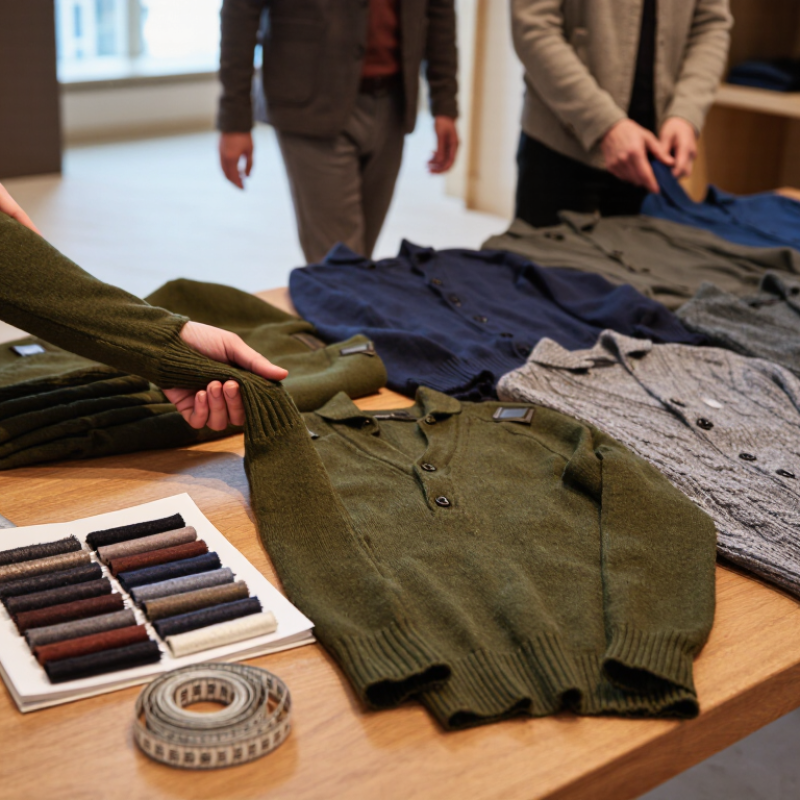
An army winter sweater is a knitted mid-layer designed to retain warmth beneath a field jacket or coat. It usually has a close-fitting shape, durable cuffs, and a neckline that works with layered clothing. Wool blends can provide warmth and manage moisture, while synthetic fibers often dry faster. The right choice depends on climate, activity, and care requirements. No sweater works equally well for every cold-weather role.
Its main job is to slow heat loss without restricting movement. In a drafty vehicle or during a long outdoor watch, a dense knit can make a noticeable difference. Yet a very thick sweater may feel clammy during brisk activity. Buyers should examine knit density, seam comfort, stretch recovery, and how the garment fits over a base layer. These details matter in repeated wear. Color consistency and size grading also deserve a practical check across wholesale samples; small fit differences can be frustrating.
Tips: Test samples with a shirt and outer layer, not alone. Check sleeve length when arms are raised. Ask how the fabric behaves after washing, and confirm care instructions are clear. One detail is easy to overlook: warm fibers can still feel uncomfortable if the collar rubs the neck. Keep that in mind.
For wholesale buyers, sweater warmth starts with fiber and construction. Wool traps air well, while acrylic can reduce cost and simplify care. Blends often balance softness, shape retention, and price, but the exact result depends on yarn quality and garment weight.
Ask suppliers for fiber percentages and care instructions, then check samples after washing. A sweater that feels warm under showroom lights may pill or stretch during regular wear.
Knit structure matters too. A dense ribbed collar and cuffs help limit drafts, while tighter body stitches can improve wind resistance. They do not make a sweater waterproof.
Small details matter. Reinforced seams, even stitching, and securely attached buttons can reduce early returns. Check underarm seams and pocket edges, where strain often appears first.
For bulk orders, compare sample measurements across sizes and inspect several pieces, not just one. Not every blend works. Some fabrics feel warm but become uncomfortable during active use, so consider the wearer’s setting and layering needs.
A slightly heavier knit may suit outdoor shifts, while a softer, lighter option can work better indoors. Ask for clear tolerances on color, weight, and sizing before confirming production.
Army-style winter sweaters differ less by appearance than by how they layer, vent heat, and handle repeated wear. The crew neck is a straightforward choice for cold conditions, with a close neckline that limits drafts. Its higher collar can feel bulky beneath a shirt or jacket. Small details matter. Check that ribbed cuffs recover their shape after stretching; loose cuffs let cold air in.
A V-neck sits neatly over a collared shirt and works well in uniform-inspired outfits or office settings. It offers less neck coverage, so buyers may need to pair it with a base layer. The quarter-zip adds adjustable ventilation. Wearers can open the collar during active work, then zip up when standing in the cold. Zippers add convenience, but they also create another component that can fail.
Cardigan styles open fully, making them easy to put on over layered clothing, though buttons may snag or loosen. For wholesale orders, compare knit weight, fiber blend, seam construction, and care requirements alongside style. Denser knits generally feel warmer, while lighter blends can be easier to layer and maintain. There is no perfect cut for every buyer. It is easy to overvalue appearance and overlook sleeve length or shrinkage; sample checks can catch those mismatches before a large order.
| Sweater Style | Typical Knit and Materials | Warmth and Ventilation | Layering and Mobility | Common Functional Use | Wholesale Buying Considerations |
|---|---|---|---|---|---|
| Crew-Neck Pullover | Usually a midweight rib-knit or jersey-knit sweater; common fibers include wool, acrylic, and blended yarns. | Provides steady torso warmth. The close-fitting neckline limits drafts, but offers less ventilation than an open-neck style. | Works well over a base layer and under a jacket. The simple neckline generally fits comfortably beneath outerwear. | A versatile option for routine cold-weather wear, indoor-to-outdoor use, and uniform layering. | Check neck opening, cuff recovery, and size grading. Blended yarns may be easier to care for than wool-only options. |
| V-Neck Pullover | Often made in a fine- or medium-gauge knit, with ribbed trim at the neckline, cuffs, and hem. | Offers moderate warmth. The open neckline allows more heat release than a crew neck. | Designed to sit over a collared shirt; usually layers neatly beneath a coat or field jacket. | Useful where a collared shirt or uniform layer is intended to remain visible. | Review V-depth and neckline shape across sizes. Confirm that trim stays flat and does not stretch excessively with wear. |
| Button-Front Cardigan | Commonly produced in a medium-gauge knit with a full-length button closure and reinforced front edges. | Warmth is adjustable: opening the front improves ventilation, while fastening it helps retain heat. | Easy to put on or remove without pulling over the head. The front placket may add bulk under close-fitting outerwear. | Practical for changing indoor temperatures, duty settings, and situations where quick layering is useful. | Assess button attachment, placket reinforcement, and spare-button provisions. Confirm closure details meet the intended use requirements. |
| Quarter-Zip Pullover | Typically a knit body with a short zipper at the neck; some versions use a stand collar and reinforced zipper area. | Adjustable ventilation at the neck. When zipped up, the collar helps cover the throat. | Convenient to put on and remove. The zipper can be opened for comfort during activity or closed in cold conditions. | Suitable for variable activity levels and changing temperatures when quick temperature adjustment is useful. | Check zipper quality, collar comfort, and whether the zipper pull is secure. Confirm that the zipper does not interfere with outer layers. |
| High-Neck Pullover | Usually a midweight knit with a taller ribbed or folded collar; fiber content varies by specification. | Provides added neck coverage and helps reduce drafts around the collar area. | Layers well beneath a roomy coat, but the taller neck may feel restrictive under a tight collar or scarf. | Well suited to cold, windy conditions when additional neck coverage is preferred. | Check collar height, stretch, and recovery. Request fit samples to ensure the neck opening is comfortable across the size range. |
| Heavy-Gauge Rib-Knit Sweater | Uses thicker yarns and a pronounced rib structure, often with reinforced ribbed cuffs and hem. | Generally offers more insulation than a lightweight knit, but may retain more heat during strenuous activity. | Best worn as an outer or middle layer with enough room for movement; thicker fabric can feel bulky under fitted jackets. | Appropriate for stationary or low-activity use in colder conditions where a heavier layer is needed. | Evaluate finished weight, bulk, and stretch. Check packing volume and ensure the intended outerwear can accommodate the garment. |
| Lightweight Fine-Gauge Pullover | Made with finer yarns and a smoother, lighter knit than a heavy-gauge sweater. | Provides light insulation and is less likely to feel overly warm indoors or during moderate activity. | Low bulk makes it easy to layer beneath a uniform shirt, jacket, or coat. | Useful as a flexible base-to-mid layer in mild winter conditions or variable indoor environments. | Inspect knit density, seam finish, and resistance to snagging. Confirm care instructions and intended layering role before ordering. |
Buying note: Fiber content, knit weight, fit, and care requirements vary by supplier and specification. Request samples and verify measurements, color requirements, labeling, and applicable uniform standards before placing a bulk order.
Wholesale buyers should compare fiber composition, fabric weight, knit gauge, and test results together. Textile Exchange’s 2024 Materials Market Report estimates that global fiber production reached 124 million tonnes in 2023, with polyester making up about 57%. This scale makes fiber traceability worth checking. Recycled content alone does not guarantee a durable sweater.
Request fiber percentages, garment weight in grams per square metre, and gauge details. Compare samples in the same size. Gauge affects knit density; weight can influence warmth, drape, and shipping costs. Heavier is not always warmer. Check cuff recovery, seam strength, pilling, and shrinkage after washing. Ask suppliers to state test methods and tolerances, not simply “pass.” Small details matter.
For repeat orders, compare colorfastness to washing and rubbing, plus pilling using recognized methods such as ISO 105-C06, ISO 105-X12, and ISO 12945-2. Test the actual colors and production lot; dark olive may behave differently from charcoal. Specify size tolerances, label placement, carton quantities, and acceptable defect rates in the purchase documents. Field trials can reveal fit problems, though one trial cannot represent every wearer. Keep a sealed reference sample for later comparison.
Example knit-composition profiles for wholesale RFQs. Percentages are illustrative specification options, not market averages or data from specific suppliers.
Compare fiber percentages alongside fabric weight, knit construction, sizing, color, care requirements, and test documentation. Confirm final specifications with samples and applicable procurement requirements.
Wholesale buyers should verify a supplier’s yarn, construction, and testing records before comparing prices. Request fiber-content declarations and independent results for pilling, abrasion, and dimensional change after washing. Textile Exchange’s Materials Market Report 2024 estimates global fiber production reached 124 million tonnes in 2023, with polyester accounting for 57%. Check the lot. Ask suppliers to identify fiber sources and keep test records tied to the production batch; a general certificate may not describe the yarn in your sample.
Approve a fit sample using the exact fabric and knitting gauge planned for production. Record chest width, body length, sleeve length, and measurement tolerances in a shared spec sheet. The NRF and Happy Returns 2024 report estimated retail returns at 16.9% of annual sales. This is a broad retail benchmark, not a sweater-specific rate. Small misses add up. Test several sizes on intended wearers, then confirm grading before locking the size ratio.
Before placing a bulk order, clarify minimum quantities by color and size, production lead time, payment schedule, and replacement terms for defects. Request a pre-production sample and agree on inspection points, such as seam strength, loose threads, and measurements after washing. Confirm carton counts and size labels match the packing list. Leave time for corrections; even a supplier’s stated capacity can shift when yarn or dye lots arrive late.