Choosing the best China Training Belts requires more than comparing factory prices. Global buyers must examine materials, construction, sizing, and supplier reliability. A belt may look strong in product photos, yet feel uncomfortable after several training sessions. Real performance appears under repeated lifting, bending, and adjustment.
This guide focuses on practical buying details. We will compare leather, nylon, and reinforced synthetic options. We will also examine buckle designs, stitching quality, edge finishing, and waist measurement systems. A dependable Training Belts supplier should provide clear specifications, consistent samples, and responsive communication. Ask for close-up images. Request a physical sample when possible. Small details matter.
The best choice depends on the user, market, and training purpose. Powerlifting customers may prefer firm leather support. General fitness users often value lighter nylon belts. Retail buyers also need stable packaging, private-label flexibility, and predictable production schedules. Factory audits, material records, and quality inspections can reduce avoidable surprises. Still, no supplier is perfect. I have seen attractive samples hide uneven stitching or confusing size charts. That is why responsible buyers should test products before placing large orders. This article offers a balanced framework for evaluating Chinese manufacturers and selecting Training Belts with confidence, while leaving room for careful review and improvement.
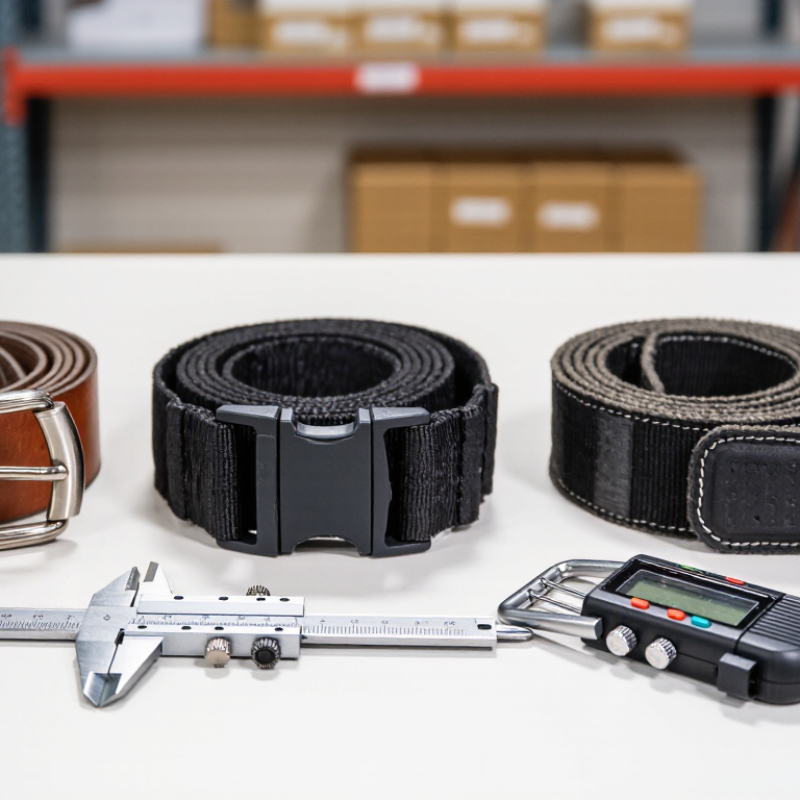
China training belts are fitness accessories made for resistance training, weightlifting, and general gym use. They usually include leather, nylon, neoprene, or layered synthetic materials. Each material offers a different balance of support, comfort, flexibility, and price.
Global buyers need them because Chinese manufacturers often provide varied designs and production quantities. A buyer can request different widths, buckle systems, stitching patterns, and packaging options. However, a low price does not prove good quality. Belt thickness, edge finishing, buckle strength, and stitching consistency require physical inspection. No specification sheet replaces a sample. Even experienced buyers can overlook discomfort during repeated movement.
Tips: Ask for material details, size tolerances, load-testing information, and inspection records. Check whether the buckle closes smoothly and stays secure under pressure. Test several sizes, not only one sample. Confirm packaging protects the belt from moisture and deformation during transport. Also review applicable product-safety and labeling requirements in the destination market. Requirements may differ between regions, so written confirmation is safer than assumptions. A useful checklist should include odor, surface cracks, loose threads, sharp edges, and adjustment accuracy. Some belts look strong but feel rigid after ten minutes. That small problem can reduce customer satisfaction. Supplier communication matters too, although clear communication does not guarantee consistent production. Regular inspections remain necessary.
What Are the Best China Training Belts for Global Buyers?
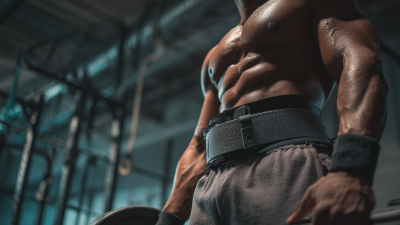
For strength training, material choice should follow the exercise, not appearance. Full-grain leather offers firm support and usually becomes more comfortable with use. It suits squats, deadlifts, and heavy compound lifts. Nylon belts feel lighter and flex more easily. They work well for general fitness, circuit sessions, and athletes who change positions often. Neoprene provides soft contact against the waist, but it may not offer enough stability for maximum loads.
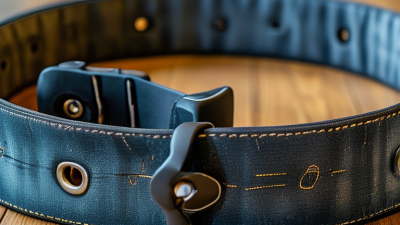
Design changes the training experience. A wide back panel can spread pressure across the lower back. A tapered front may allow easier bending during cleans or functional movements. Prong buckles feel familiar and hold securely, while lever systems allow fast adjustments between sets. However, lever alignment must be checked carefully. Poor positioning can create discomfort.
Small details matter. Examine stitching near the buckle, edge finishing, hole spacing, and odor after unpacking. A reliable buyer should request material specifications, size tolerances, and product inspection records from the factory. Independent load testing adds useful evidence, although laboratory results cannot fully predict gym performance. Ask for samples before placing a large order.
Sizing is still imperfect. Different manufacturers measure the waist differently. Measure around the training position, not over loose clothing. Some users prefer a rigid belt, while others need controlled movement. The best China training belt is the one matching load, exercise style, body shape, and adjustment habits. Looks help, but they do not carry the weight.
What Are the Best China Training Belts for Global Buyers?
Global buyers should evaluate performance, not only appearance. The Global Wellness Institute’s 2024 report valued the physical activity economy at about US$1.1 trillion in 2023. Demand is expanding, but quality still varies between factories. A strong training belt should keep its shape under repeated compression. Check the leather or synthetic layer, edge finishing, stitching density, buckle strength, and hole spacing. A belt that feels stiff in a showroom may become uncomfortable during squats.
Ask suppliers for measurable evidence. Useful checks include tensile strength, tear resistance, abrasion resistance, and repeated fastening tests. ISO 3376 and ISO 3377-1 can guide leather strength testing. ASTM D4966 can support abrasion evaluation for textile surfaces. ISO 9001 shows process management, not product performance. That distinction matters. Request third-party reports, batch records, material declarations, and pre-shipment samples. Test samples after sweat exposure and bending cycles. The International Organization for Standardization reports that standards support consistency and safer international trade, but buyers still need product-specific verification.
Tips: Measure belt width, thickness, and hardness at several points. Compare five samples from one production batch. Inspect loose threads. Try the buckle with gloved hands. Ask for the failure rate, not only the pass rate. A factory may provide impressive documents, yet overlook edge cracking. I have seen buyers trust photographs too quickly. That is a mistake worth admitting. Require clear tolerances, packaging tests, and corrective-action records before placing a large order.
| Training Belt Type | Typical Core Material | Recommended Training Use | Common Width | Typical Thickness | Typical Tensile Strength | Typical Elongation at Break | Expected Service Temperature | Key Quality Checks for Buyers | Relevant Test or Compliance References |
|---|---|---|---|---|---|---|---|---|---|
| Leather Weightlifting Belt | Full-grain or split cowhide leather; reinforced stitching | Squats, deadlifts and general strength training | 100–150 mm | 8–13 mm | Approx. 20–35 MPa leather tensile strength | Approx. 25–45% | About −10°C to 60°C | Leather thickness consistency, edge finishing, stitch density, buckle deformation, odor and moisture resistance | Leather tensile and tear testing; nickel-release testing for metal parts where required; REACH chemical restrictions for EU shipments |
| Nylon Strength Belt | Woven nylon webbing with foam or EVA padding | Functional training, circuit training and general gym use | 100–150 mm | 6–12 mm | Approx. 10–25 kN webbing breaking force | Approx. 15–30% | About −20°C to 80°C | Webbing weave uniformity, seam strength, hook-and-loop cycle life, buckle load capacity and dimensional stability | Webbing tensile testing; abrasion and cyclic fastening tests; ISO 105-C06 may be used for colorfastness evaluation |
| Neoprene Support Belt | Neoprene or SBR foam with polyester or nylon outer fabric | Light to moderate lifting and lumbar support | 100–150 mm | 5–10 mm | Approx. 5–12 MPa foam or coated-material tensile strength | Approx. 150–350% | About −20°C to 70°C | Foam recovery, compression set, odor, lamination bonding, seam durability and sweat resistance | Compression-set and tensile testing; azo-dye and restricted-substance testing for textile components |
| Powerlifting Lever Belt | Thick vegetable-tanned or chrome-tanned leather with steel lever hardware | Heavy squats, deadlifts and powerlifting-style training | 100–110 mm | 10–13 mm | Approx. 25–40 MPa leather tensile strength | Approx. 20–40% | About −10°C to 60°C | Belt flatness, lever alignment, screw retention, hole positioning, leather delamination and repeated-load performance | Leather tensile and flexing tests; hardware corrosion testing; dimensional inspection based on approved samples |
| Dip or Pull-Up Belt | Nylon or polyester load strap with chain or reinforced metal attachment points | Weighted dips, pull-ups and bodyweight resistance exercises | 75–120 mm | 4–10 mm | Approx. 10–25 kN strap breaking force | Approx. 10–25% | About −20°C to 80°C | Attachment-point pull-out strength, chain weld quality, strap fraying, buckle security and proof-load performance | Static proof-load and breaking-load tests; metal corrosion testing; visual inspection of welds and load-bearing seams |
| Rehabilitation and Mobility Belt | Elastic webbing, neoprene or soft polyester fabric | Low-load rehabilitation, mobility drills and posture support | 80–130 mm | 3–8 mm | Approx. 2–8 kN webbing breaking force | Approx. 50–200% | About 0°C to 60°C | Skin-contact comfort, elastic recovery, seam softness, colorfastness, wash resistance and absence of sharp edges | Textile colorfastness, pH, azo-dye and formaldehyde testing; applicable consumer-product chemical requirements |
For global buyers, training belts should be checked through documents, materials, and practical testing. Ask the supplier for a current test report from an ISO/IEC 17025-accredited laboratory. The report should identify the exact belt material, color, production batch, and testing date. Relevant checks may include colorfastness, azo dyes, formaldehyde, heavy metals, and restricted chemicals under REACH or similar market rules. For children’s products, buyers may also need requirements such as CPSIA, depending on the destination country. These rules differ, so one certificate rarely fits every market.
Do not confuse factory certification with product compliance. ISO 9001 can show controlled quality procedures, but it does not prove that every belt is safe. Check seam strength, stitching density, edge finishing, buckle attachment, and abrasion resistance. Pull the buckle firmly and inspect the belt after repeated bending. Loose threads can become a real problem during training. Product labels should show fiber content, care instructions, importer details, and batch traceability when required. Some buyers focus too heavily on paperwork. That is understandable, but physical samples still reveal weaknesses that reports may miss.
Tips: Request three samples from different production lots. Compare thickness, length, dye consistency, and stitching. Keep signed specifications with the purchase order. Ask whether recycled fibers, coatings, or adhesives have separate test records. If a supplier provides vague certificates, pause the order and verify the laboratory, report number, and scope. Even careful checks can miss defects, so independent pre-shipment inspection is worth considering.
Typical validity or review cycle of key compliance evidence used when sourcing training belts. A zero value means the requirement is ongoing and does not have a universal certificate expiry period.
Buyers should request current test reports for restricted substances, material specifications, traceability records, and product risk assessments. ISO 9001 and ISO 14001 certificates commonly follow a three-year certification cycle with periodic surveillance audits. OEKO-TEX STANDARD 100 certificates are generally valid for one year. REACH and the EU General Product Safety Regulation are continuing legal obligations rather than universal product certificates, so buyers should verify applicable substances, labeling, technical documentation, and market-specific responsibilities.
For global buyers, comparing Chinese training-belt suppliers requires more than checking the lowest quote. Ask for factory photos, production capacity, material specifications, and recent quality records. A dependable supplier should explain leather thickness, nylon density, buckle grade, and stitching methods. Request a sample made from production materials. Photos can hide weak edges. They often do.
Compare costs through a landed-cost sheet. Include sample fees, tooling, packaging, inspection, freight, duties, and payment terms. A low unit price may become expensive after custom molds or small-order surcharges. Ask for pricing at several quantities, such as 100, 500, and 1,000 pieces. Confirm lead times in writing. Delays matter when seasonal fitness programs are involved. I would also ask how rejected units are handled. This detail reveals operational maturity.
Customization should be specific, not merely “add our logo.” Buyers can define belt width, padding, color, buckle finish, size range, label position, carton marks, and retail packaging. Require a digital proof and pre-production sample before approval. Request basic load testing and dimensional checks, with records linked to each batch. No supplier is perfect. I have seen clear specifications still produce inconsistent sizing. Keep a tolerance range, use independent inspection when volume justifies it, and record every agreed detail in the purchase contract.