
Choosing a Film Cutting Machine in 2026 is about more than blade speed. Buyers must match the machine to their film type, production volume, and required cut quality. A unit that handles thin packaging film may struggle with thicker laminates or frequent material changes. The difference becomes visible at the edge: curled film, rough cuts, and wasted rolls can quickly disrupt a shift.
Quality expert W. Edwards Deming offered a useful reminder: “In God we trust; all others must bring data.” His words were not about film cutters, but they fit the buying process. Compare verified specifications, request sample cuts, and check performance using your own material. Ask about cutting accuracy, usable film width, changeover time, operator training, and service support. A polished brochure cannot answer every question.
Small details matter. A stable feed path can help prevent wrinkles. A clear control interface can reduce setup mistakes. And a machine that is easy to maintain may save more time than one with an impressive top speed. There is no perfect choice for every plant. Some buyers may also need to rethink their initial shortlist after testing real production runs. The seven machines in this guide are assessed through practical buyer criteria, not headline claims alone, to help you identify a suitable fit for your operation in 2026.
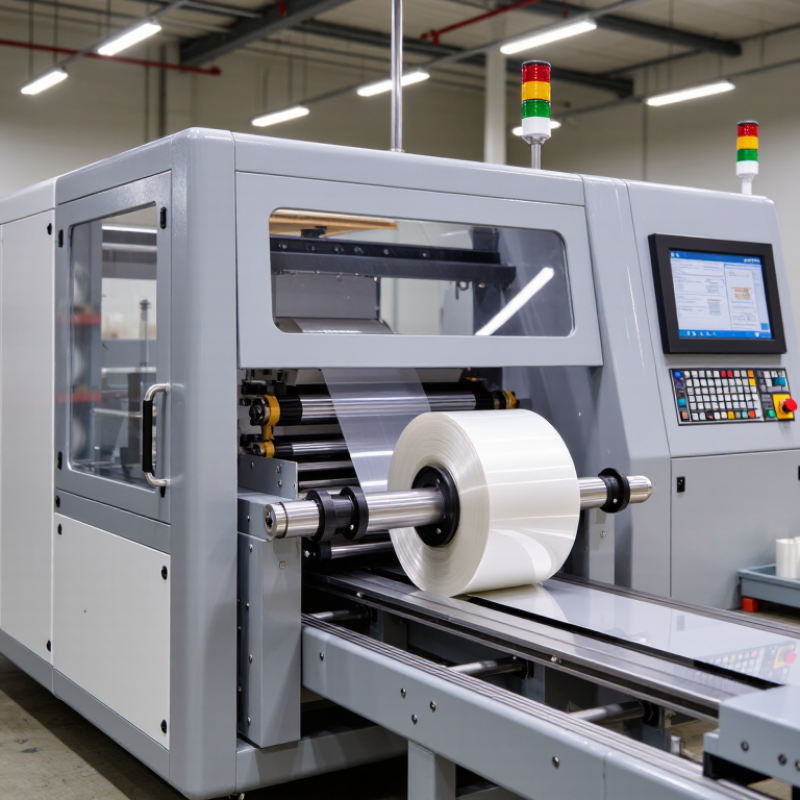
Film cutting machines convert continuous rolls or printed sheets into precise shapes and widths. A web unwinds under controlled tension, then guides and sensors keep artwork aligned. A rotary blade suits long, fast production runs. Flatbed knives handle short runs and intricate contours. Lasers cut without blade pressure, but heat can distort sensitive films. Small setup errors show quickly.
These machines process packaging films, labels, protective layers, and adhesive-backed materials such as PET and polypropylene. Operators set blade depth, speed, and registration to match the film’s thickness and finish. Some systems also slit rolls into narrower lanes or remove surrounding waste.
The Grand View Research report Flexible Packaging Market Size, Share & Trends Analysis, 2024–2030, valued that market at about $261.6 billion in 2023 and forecast 4.4% annual growth through 2030. That matters. More converting work means more pressure to cut accurately while limiting scrap.
Buyers should test the actual film, not just a sample specification. Stretchy laminates may shift; coated surfaces may mark or fray. Check edge quality, changeover time, waste removal, and sensor performance during a real production trial. A machine that cuts quickly on paper can still disappoint on a thin, static-prone web. Even a careful trial cannot predict every shift in temperature or roll tension.
Film-cutting machines differ mainly in how they guide a blade or beam through sheet material. Drag-knife plotters pull a swiveling blade across the surface, making them practical for thin films, labels, and repeated shapes. Tight corners can lift delicate material when blade depth or feed speed is poorly set. Small details matter.
Tangential cutters actively rotate the blade at corners instead of relying on material drag. This can produce cleaner edges on thicker laminates and intricate outlines, though setup and maintenance require more attention. Rotary cutters use a rolling blade, reducing pulling forces on soft or stretchy films. They may help when a narrow blade leaves distorted edges.
Laser systems cut without physical blade contact, avoiding tool wear and handling detailed patterns. However, heat may discolor, melt, or curl some films, so check compatibility with a test coupon. Digital flatbed cutters hold sheets under vacuum and can use registration cameras to align cuts with printed marks. Test before scaling. No machine is best for every job. Compare film thickness, adhesive behavior, corner quality, throughput, and test-run waste. A small trial can reveal more than a specification sheet; even experienced operators sometimes overlook liner release or static buildup.
Seven film cutting machines worth considering in 2026 serve different jobs: rotary slitters for continuous rolls, guillotine cutters for straight cuts, and digital flatbeds for varied shapes. Add plotter cutters for short runs, laser systems for intricate patterns, label die cutters for repeat formats, and precision sample cutters for small test pieces. Each handles film differently. Thin, stretchy stock may wrinkle under a blunt blade, while heat-sensitive films need careful testing before laser cutting.
PMMI’s 2024 State of the Industry report valued U.S. packaging machinery shipments at $10.2 billion in 2023, showing the scale of investment around packaging production. That figure is not a film-cutter sales total, but it gives useful context. For a buyer, compare usable cutting width, feed control, changeover time, and scrap rate—not just advertised speed. A narrow roll may run neatly on a slitter, yet demand a flatbed for custom shapes. The awkward trade-off is that versatility can mean slower throughput. Ask for a material trial using your actual film thickness and finish; a clean sample on one substrate proves little about another.
A film cutting machine should be judged by the work it can repeat, not just its advertised speed. Compare cutting accuracy on the materials you actually use, including thin, stretchy, or laminated film. Ask for a sample cut with tight curves and small lettering. Inspect the edges under bright light. Ragged corners can waste more time than a slower cutting pass.
Compatibility often decides whether a machine fits your workflow. Check its usable film width, roll-feed tracking, file formats, and registration method. If your designs include printed marks, test whether the sensor reads them reliably on glossy surfaces. Confirm that common blades and cutting mats are easy to source. Small setup details matter. A machine that accepts your file but needs repeated manual adjustments may still slow production.
Compare operating costs over a realistic month, not just the purchase price. Include blade replacement, material waste, maintenance, software fees, and the labor needed for setup. A low-cost model may become expensive if it drifts during long jobs. Request a timed test using a typical batch size, then note how often calibration is needed. I would not assume one test proves long-term reliability; that is an easy mistake to make. Check twice. Ask suppliers for service response times and written warranty terms before committing.
Choosing a film cutting machine starts with the roll, not the brochure. Record film type, thickness, web width, core size, and daily changeovers. A 12-micron film behaves differently from a stiff laminate; test both at the intended speed. Look for steady tension control, clean slitting edges, guarded blades, and accessible change parts. Small details matter. A rough edge can spoil an otherwise usable roll.
Market growth offers context, not a buying forecast. Smithers’ The Future of Global Packaging to 2028 estimates that packaging value will rise from $1.17 trillion in 2023 to $1.42 trillion in 2028. Grand View Research valued the global flexible packaging market at $265.04 billion in 2023, projecting 4.3% annual growth through 2030. Match machine capacity to your actual order mix, setup time, and acceptable waste. Ask for a trial with your own film, then check edge quality and roll hardness after rewinding. Check that operators can thread the web safely and reach routine adjustments. I would still question impressive maximum-speed claims; stable output across thin and printed films matters more. Allow for tooling, training, and spare blades, too.
Film gauge is one factor to consider when choosing a cutting machine. The chart shows typical commercial thickness ranges for seven common film materials; actual ranges vary by application and supplier.
Use these ranges as a starting point, not as machine specifications. Before buying, check the machine’s blade or cutting method, tension control, speed, web width, and compatibility with your film structure.