
10 Best Flag Banner Poles for Outdoor Displays

Outdoor displays compete with moving cars, shifting crowds, and changing weather. A flag can catch the eye in seconds—or disappear against a busy storefront. The Outdoor Advertising Association of America reported a record $9.1 billion in U.S. out-of-home advertising revenue in 2023. That figure reflects the continuing value of visible, place-based messaging, though it does not guarantee results for every business or display.

A dependable Flag Banner Pole helps keep the message upright, readable, and suited to its setting. The right choice depends on more than price. Consider flag shape, pole height, base weight, setup time, and exposure to wind. A feather flag beside a quiet entrance faces different conditions from a tall banner near an open parking lot. Small details matter. Check the manufacturer’s wind guidance, inspect fittings for wear, and confirm that the base sits level on the surface. Even sturdy hardware has limits.

This guide compares 10 outdoor flag banner poles, focusing on practical differences that buyers can assess before installation. We look at portability, material, stability, compatibility, and everyday handling. No single pole fits every site. That is worth admitting. A lightweight model may be easy to carry but less steady in gusts, while a heavier base can slow setup. Use the comparisons as a starting point, then match the pole to your flag, location, and local conditions.
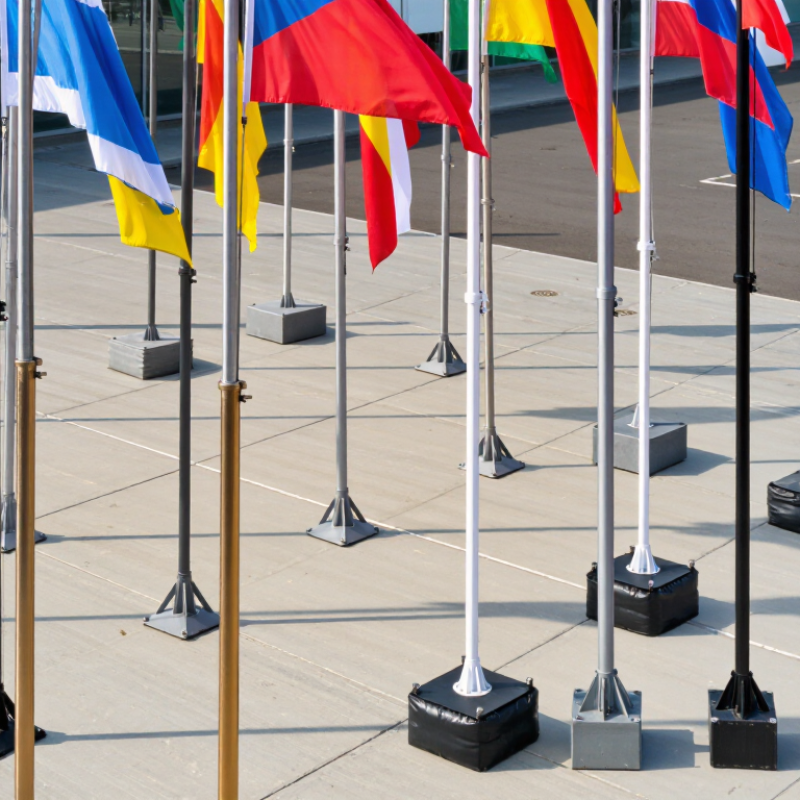
10 Best Flag Banner Poles for Outdoor Displays

Understanding Flag Banner Poles and Their Outdoor Uses

Flag banner poles support lightweight fabric signs at shop entrances, roadside events, sports grounds, and temporary outdoor displays. Their job is simple, but conditions are not. Wind loads the fabric like a small sail, so pole height, fabric area, joint strength, and anchoring all affect stability. Wind matters.

Choose a pole for the banner’s dimensions and the site’s exposure, not appearance alone. An open car park may face stronger gusts than a sheltered courtyard. The American Society of Civil Engineers’ ASCE 7 standard sets wind-design criteria by location and exposure; it does not provide one universal safe wind limit for every banner setup. NOAA’s 2023 U.S. Billion-Dollar Weather and Climate Disasters report counted 28 separate disasters, with estimated losses of $92.9 billion. That figure is not a pole-performance test, but it underlines why local weather deserves attention.

For practical use, secure the base on firm, level ground and check that every connector locks fully. Keep fabric taut, but avoid forcing a pole beyond its designed fit. After gusty weather, inspect for bent sections, loose fittings, frayed stitching, and a base that has shifted. Small details matter. A display can look stable right up to the moment its footing moves; that is an easy assumption to underestimate. Remove or lower it when conditions exceed the manufacturer’s stated limits.

Key Features That Affect Stability, Durability, and Visibility

A flag pole’s stability starts at the base, not the fabric. On firm grass, a ground stake with a secure fit resists twisting better than a thin spike. For pavement, a weighted base matters; check its footprint and compatibility with the pole’s height. Gusts expose weak joints quickly. A flexible fiberglass section can absorb movement, while a rigid metal pole may feel steadier in calm weather. Neither choice is automatically better. Match the setup to the site’s wind exposure and flag size, and follow the manufacturer’s installation limits.

Durability depends on more than material names. Look for corrosion-resistant finishes, tight locking collars, and fittings that will not pinch or fray the flag sleeve. After rain, dry the joints before storage; trapped moisture can shorten service life. Visibility depends on height and motion. A flag that clears parked cars and shrubs is easier to see, but extra height increases leverage in gusts. Contrast helps: saturated fabric against an uncluttered background reads clearly from a distance. Check stitching and pole fit together, since a loose sleeve can wrap around the shaft and hide the design. Easy to miss. No setup is perfect; inspect the pole and fittings after rough weather.

Ten Flag Banner Poles for Different Outdoor Display Needs

Outdoor displays call for different pole designs, depending on ground, banner shape, and setup time. A telescopic pole adjusts to changing display heights and packs down easily. A sectional pole breaks into short pieces for transport. A single-piece pole feels simple and sturdy, but takes more storage space. A feather-flag pole follows a curved sleeve, keeping fabric visible in light breezes. A teardrop pole holds its distinctive shape with a tensioned top curve. Check the sleeve dimensions before ordering; a small mismatch can make assembly frustrating.

For open lawns, a ground-stake pole presses directly into soil. It is quick to install, though compacted ground may resist the stake. A cross-base pole suits pavement and indoor floors, where stakes are not an option. A water-fill base adds weight for exposed sites, but it can be awkward to carry when full. A square-plate base offers a low profile on firm, level surfaces. Uneven paving can still make it wobble.

Wall-mounted poles work well near entrances, where floor space is limited. An angled pole projects a banner outward for better visibility along a walkway. Heavy-duty poles use thicker sections for larger fabric or frequent outdoor use, but added weight matters during transport. Before choosing, consider how the pole will be anchored, how often it will move, and the wind exposure at the actual site. A setup that looks stable in a sheltered showroom may behave differently outdoors.

10 Best Flag Banner Poles for Outdoor Displays — Ten Flag Banner Poles for Different Outdoor Display Needs
No. Pole or Setup Type Typical Display Height Common Pole Material Mounting Method Suitable Outdoor Use
1 Feather banner pole Approximately 8–15 ft Fiberglass, aluminum, or a combination Ground stake or compatible base Retail entrances, event grounds, and roadside promotions; use a base suited to the surface and expected wind.
2 Teardrop banner pole Approximately 6–15 ft Flexible fiberglass sections, sometimes with an aluminum lower section Ground stake, cross base, or other compatible base Markets, outdoor events, and smaller display areas where a compact curved banner shape is useful.
3 Rectangular banner pole Approximately 8–15 ft Aluminum or fiberglass Ground stake or weighted base Displays needing a broad rectangular graphic; check the banner’s dimensions and wind exposure before selecting a base.
4 Telescopic banner pole Commonly adjustable from about 6–15 ft Aluminum or fiberglass Compatible ground stake, base, or mounting bracket Temporary displays that benefit from adjustable height and a pole that packs down for transport.
5 Ground-spike pole setup Usually about 8–15 ft, depending on the pole Aluminum or fiberglass pole with a steel ground spike Spike inserted into suitable soil Grass and firm soil at fairs, sports fields, or outdoor events; not intended for pavement or loose, unstable ground.
6 Cross-base pole setup Usually about 6–15 ft, depending on the pole Aluminum or fiberglass pole with a metal cross base Freestanding cross base; optional compatible ballast Hard, level surfaces such as patios or paved event areas. A cross base alone may not provide enough stability in windy conditions.
7 Water-ballast-base setup Usually about 8–15 ft, depending on the pole and base Aluminum or fiberglass pole with a fillable plastic base Base filled with water as specified by its manufacturer Outdoor displays on level hard surfaces where a portable, fillable base is practical; empty it for easier transport.
8 Vehicle wheel-base pole setup Usually about 8–15 ft, depending on the pole Aluminum or fiberglass pole with a steel wheel plate Wheel plate secured beneath a stationary vehicle tire Temporary displays at car shows or roadside events; use only on suitable level ground with the vehicle parked securely.
9 Auger-ground pole setup Usually about 8–15 ft, depending on the pole Aluminum or fiberglass pole with a metal screw-in anchor Auger screwed into firm soil Grass or soil where a ground stake may not provide enough hold; avoid rocky ground and check that the anchor is compatible with the pole.
10 Wall-bracket banner pole Varies by pole and installation; often about 4–10 ft of banner height Aluminum pole with a metal wall bracket Bracket fastened to a structurally suitable exterior wall Building entrances and storefronts with limited ground space; choose fixings appropriate for the wall material and local wind exposure.
Heights and materials are typical examples, not universal specifications. Confirm banner compatibility, base capacity, installation requirements, and local wind conditions before use.

How to Choose a Pole for Your Flag, Location, and Weather

A flag pole should suit the flag’s size, weight, and shape. A narrow pole may bend under a large banner, while a heavy pole can overwhelm a small garden flag. Check the manufacturer’s recommended flag dimensions and pole diameter before buying. For feather or teardrop flags, confirm that the pole’s fittings match the flag’s sleeve and shape. That detail matters.

Your location helps determine the mounting style. A patio or lawn may need a ground stake, while a wall or balcony calls for a secure bracket. On open ground, wind can catch a flag like a sail. Choose a sturdy pole with a suitable base, and follow its stated wind guidance. No pole is windproof. I’ve seen displays become unstable when the base was too light for the site; it’s easy to underestimate a gust.

Consider the local weather, too. Aluminum is light and resists rust, while fiberglass offers some flexibility in breezy conditions. Either material still needs inspection. Look for loose joints, cracked fittings, and a leaning base after storms. Not always obvious. A little shade from nearby trees can reduce sun exposure, but branches may snag fabric. Match the pole to the place where it will actually stand, not just the product photo.

Installation and Maintenance for Long-Lasting Outdoor Displays

A long-lasting outdoor display begins below ground. Match pole height and flag area to the site’s exposure, then follow the pole maker’s specified embedment and footing dimensions. Check soil firmness and drainage before setting the base; waterlogged soil can loosen it over time. Keep the pole plumb while concrete cures, and avoid overtightening guy lines. A small lean becomes obvious once the flag catches wind.

Weather deserves more attention than appearance alone. NOAA’s 2023 Billion-Dollar Weather and Climate Disasters report recorded 28 U.S. events, each causing at least $1 billion in damage. The National Weather Service’s Beaufort Wind Scale describes 25–31 mph winds as moving large branches. These figures are not pole ratings, but they show why local wind exposure matters. Use the pole’s rated limits, and lower or remove the flag when conditions exceed them.

Inspect the pole every few months and after severe weather. Look for loose joints, bent sections, rust around fasteners, cracked footing, and frayed fabric. Check that the flag clears nearby branches and cannot wrap around the pole. Clean dirt from joints before it traps moisture. No pole stays perfect. A missed inspection is easy to regret, so record repairs and dates in a simple log.