
Choosing among the 2026 Best Smart Watch Bands for Every Buyer starts with a simple question: how will you wear your watch? A soft silicone band may suit sweaty workouts and quick rinses. Woven nylon can feel lighter during a long commute, while leather may look more at home at dinner. Small details matter. A buckle that presses against your wrist can become irritating by midday. A band that traps moisture may need more frequent cleaning.
This guide to Smart Watch Bands compares practical factors, including material, closure, comfort, care, and device compatibility. Check your watch’s exact model and attachment size before buying; bands that appear similar do not always fit the same case. Consider your daily routine, too. If you switch between the gym and the office, an easy-to-clean option may be more useful than a dressier band you rarely wear. For sensitive skin, pay attention to material descriptions and stop wearing any band that causes persistent irritation. No material is perfect.
Looks still count. So does fit. Reviews and product specifications can help, but wrist shape, climate, and personal preference affect comfort in ways a product page cannot fully show. Even a well-rated band may feel bulky on a smaller wrist, and a premium price does not guarantee a better fit. The picks ahead are organized around different needs, helping you weigh trade-offs rather than chase a single “best” option. A little trial and error is normal.
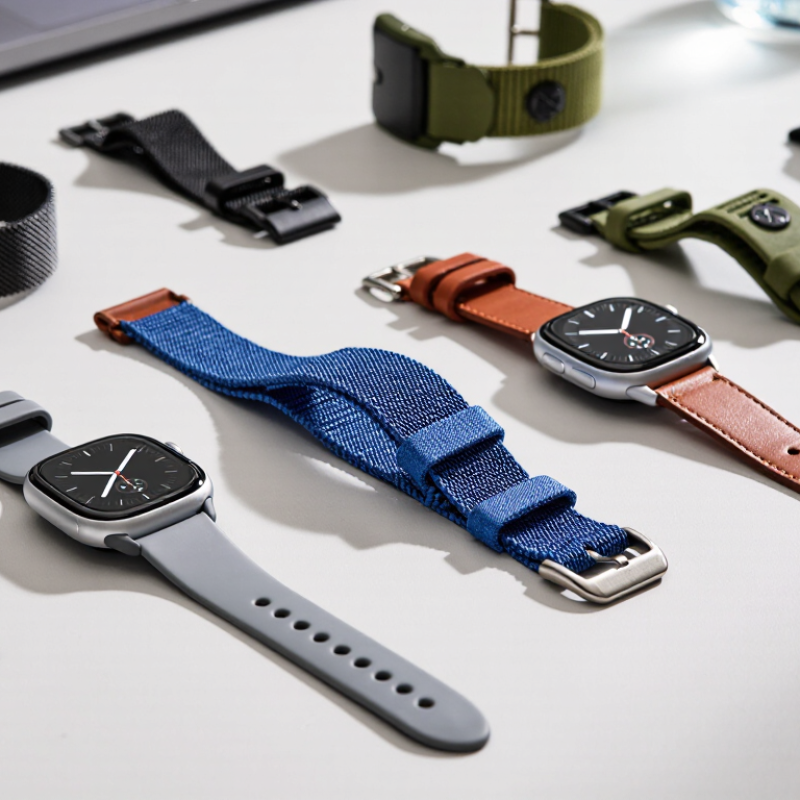
A smartwatch band is the part that holds the watch against your wrist. It also affects comfort, fit, and how easily you can clean the device. Common materials include silicone, woven fabric, leather, and metal. Each feels different during a long day: silicone wipes clean after a workout, while woven fabric may feel softer but take longer to dry. Small details matter. A stiff edge or trapped sweat can become annoying by lunchtime.
Most bands attach through small connectors at the watch’s case, often using spring bars or sliding release pins. With a spring bar, you compress a tiny pin, fit the band between the case lugs, then let the pin settle into its holes. A quick-release lever makes removal easier, but the connector still needs to match the watch. Some watches use a specific attachment shape, so width alone is not enough. Measure the gap between the lugs, and check the watch’s fitting guide before buying. After attaching a band, tug each end gently and confirm it sits evenly. It is easy to assume a click means a secure fit; I would still check twice, especially before a run.
A comfortable band starts with the right connection. Check the watch’s case size and the distance between its attachment points, often called lug width. A few millimeters matter. Compare those measurements with the band’s listed dimensions, and inspect how its connector locks into place. Some watches use model-specific fittings, so a band that looks similar may still not attach securely.
Measure your wrist with a soft tape, resting it just below the wrist bone. Keep the tape snug, not tight, and note the measurement in millimeters. Then compare it with the seller’s size chart, since “small” and “large” vary between makers. Leave room for movement. My own measurements have occasionally felt awkward at first, so checking the fit again later can help.
Consider how you wear the watch, too. A snug fit can help keep the sensor against your skin, but it should not leave deep marks. For workouts, a washable material may be easier to maintain; for daily wear, flexibility and edge comfort matter. Check the return policy before ordering, especially when sizing falls between two options. It is an imperfect choice sometimes. A quick compatibility check can prevent a band that looks right but will not stay put.
| Band Type | Common Materials | Best For | Fit and Care Notes | Compatibility Check |
|---|---|---|---|---|
| Soft sport band | Silicone or fluoroelastomer | Exercise, swimming, and everyday wear | Flexible and easy to rinse. Dry the skin and band after extended wear, especially after workouts. | Check the watch’s attachment system and required band width. A similar-looking connector may not lock securely. |
| Woven band | Nylon or other woven textile | Lightweight everyday comfort | Often breathable. Check the product’s washing instructions and allow it to dry before wearing again. | Confirm connector shape and case compatibility. Some woven bands use a specific adapter or fastening system. |
| Leather band | Leather or leather-like material | Casual or dress wear | Measure with the band worn comfortably snug. Keep leather dry and follow its care instructions. | For a standard pin attachment, match the band width to the watch’s lug width; otherwise, verify the dedicated connector. |
| Metal link band | Stainless steel or other metal | Durable, structured everyday wear | May need links removed for a secure fit. The band should not pinch or restrict wrist movement. | Check the attachment system and case shape. Confirm that the band can be adjusted to your wrist size. |
| Stretch band | Woven elastic fibers | Quick, buckle-free wear | Choose a size that stays in place without compressing the wrist. Elasticity can change with use and washing. | Verify the connector style and the band’s stated wrist-size range; stretch does not make a connector universal. |
| Standard pin-band width | Common options include 18 mm, 20 mm, 22 mm, and 24 mm | Watches with conventional lugs and spring bars | Measure the distance between the inside edges of the lugs, or check the watch documentation. | Match the band width to the lug width. Do not assume the case diameter is the band width. |
| Small wrist circumference | Any compatible band material | Wrist circumference around 130–150 mm | Use this as a rough shopping range, not a sizing standard. Check the band’s minimum wearable circumference. | Measure around the wrist where the watch sits. Include the case and clasp fit in your final check. |
| Medium wrist circumference | Any compatible band material | Wrist circumference around 150–180 mm | Use this as a rough shopping range. Look for sufficient adjustment holes or removable links. | Compare your measurement with the band maker’s stated wrist range and the watch’s attachment specifications. |
| Large wrist circumference | Any compatible band material | Wrist circumference around 180–210 mm | Use this as a rough shopping range. Check the maximum wearable circumference before ordering. | Confirm both the connector type and the band’s maximum wrist-size measurement. |
| Above 210 mm wrist circumference | Any compatible band material | Buyers needing an extended-length band | Look for an explicitly listed extended size and verify its usable length, not just the total band length. | Confirm that the extended band is offered for the exact watch attachment system and case size. |
How to check before buying: Measure your wrist circumference with a flexible tape where the watch will sit. Identify whether your watch uses standard lugs and spring bars or a dedicated connector, then check the manufacturer’s compatibility and size information. Connector designs are not universally interchangeable, even when two watches have similar case dimensions.
Choosing a watch band starts with skin, weather, and routine, not appearance alone.
Silicone and similar soft materials handle sweat and quick rinses well, making them practical for workouts and humid commutes. They can feel tacky under a cuff, though, and damp wear may irritate some skin. Rinse the underside and let it dry before fastening it again. Small habit, real difference.
Nylon feels light and breathable, but woven fibers can hold water and dry slowly after rain or a shower. Leather often suits office clothes, yet soaking and sharp creases can shorten its useful life. Stainless steel links resist everyday scuffs and wipe clean easily. They add weight, however, and a loose fit may pinch stray hairs. Ceramic feels smooth and resists surface scratches, but a hard drop can chip it. Comfort varies. Material labels cannot promise the same feel for everyone. Fit matters too: aim for a secure band that does not leave a deep mark. Try wearing it through a full day, including a warm walk. A photo cannot reveal everything, and that is easy to underestimate.
2026 Best Smart Watch Bands for Every Buyer
Choosing a Band for Work, Exercise, and Special Occasions
For work, look for a smooth, breathable band that sits flat beneath a shirt cuff. Soft silicone suits long commutes, but it can feel warm during a full day indoors. Woven fabric often feels lighter; check that its closure stays secure while typing or carrying a bag. Small details matter.
For exercise, prioritize a snug fit that does not pinch when your wrist flexes. The American College of Sports Medicine’s 2025 Worldwide Survey of Fitness Trends ranked wearable technology first among 45 trends, drawing on responses from fitness professionals. The survey tracks fitness trends, not band performance, but it underlines how often wearables accompany training. After a sweaty session, rinse compatible materials and let them dry fully. A beautiful band is no help if it irritates your skin.
Tips: Keep one practical band for daily workouts and a slimmer, understated option for special occasions. Match the band’s material to the event and your outfit, but check your watch’s fit and connector before buying. A polished finish can still feel wrong by lunchtime. I’d favor comfort over a perfect photo; that trade-off is easy to overlook.
A practical guide to choosing a band for work, exercise, and special occasions.
Relative suitability ratings from 1 (low) to 5 (high), based on common material traits such as flexibility, breathability, appearance, and ease of cleaning. These are qualitative guidance scores, not laboratory measurements; actual comfort and performance vary by band design and wearer.
2026 Best Smart Watch Bands for Every Buyer
How Comfort, Durability, and Care Shape a Smartwatch Band’s Value
A band’s value shows up after hours of wear, not just on a product page. A snug fit should keep the watch steady without leaving deep marks after a walk or desk shift. Softness matters, but a plush surface can trap sweat and take longer to dry. Fit matters daily.
Skin sensitivity deserves equal attention. The American Academy of Dermatology estimates nickel allergy affects about 10–20% of women and 1–2% of men. For buyers with known sensitivity, material details and the skin-facing clasp matter more than a polished finish. Stop wearing a band if it causes persistent irritation, and seek medical advice when symptoms continue.
Durability claims are hard to compare without shared testing. ASTM International’s D4966 method measures textile abrasion resistance using a Martindale tester, but lab results cannot promise a set number of years on a wrist. Daily friction, sunscreen, and moisture change the outcome. Rinse washable bands after sweaty use, then let them dry fully before wearing them again. Small care steps help. Yet even careful cleaning cannot rescue a band that keeps its odor or loses its shape; replacing it may be the more sensible choice.