China Best Booty Lifting Body Shaper Manufacturer?
The search for a China-based Booty Lifting Body Shaper manufacturer starts with more than a flattering product photo. Buyers need to assess pattern development, fabric recovery, stitching, sizing consistency, and production communication. A sample may look smooth on a mannequin, yet roll at the waist or lose lift after repeated wear. Small details matter.
Market signals help explain the opportunity, but they need careful reading. Grand View Research’s shapewear market analysis tracks demand across product types and regions; its category definitions may differ from other market estimates. Textile Exchange’s Materials Market Report 2024 offers a useful sourcing reference: global fiber production reached 124 million tonnes in 2023, with polyester representing 57%. That scale makes fiber choice more than a styling decision. Buyers should ask for clear fabric specifications and relevant test documentation, rather than relying on broad claims.
Fit is personal. Very personal. A dependable manufacturer should explain how it tests compression, seam strength, stretch recovery, and grading across sizes. It should also be candid about limitations, such as where a design may need another sample round. China’s manufacturing base can offer access to established textile and garment supply chains, but location alone proves nothing. Ask about actual production experience, quality checks, minimum order quantities, lead times, and communication during revisions. The best partner is not necessarily the one promising the strongest lift. It is the one able to support a comfortable, repeatable fit and back its claims with practical evidence.
What Defines a Booty-Lifting Body Shaper?
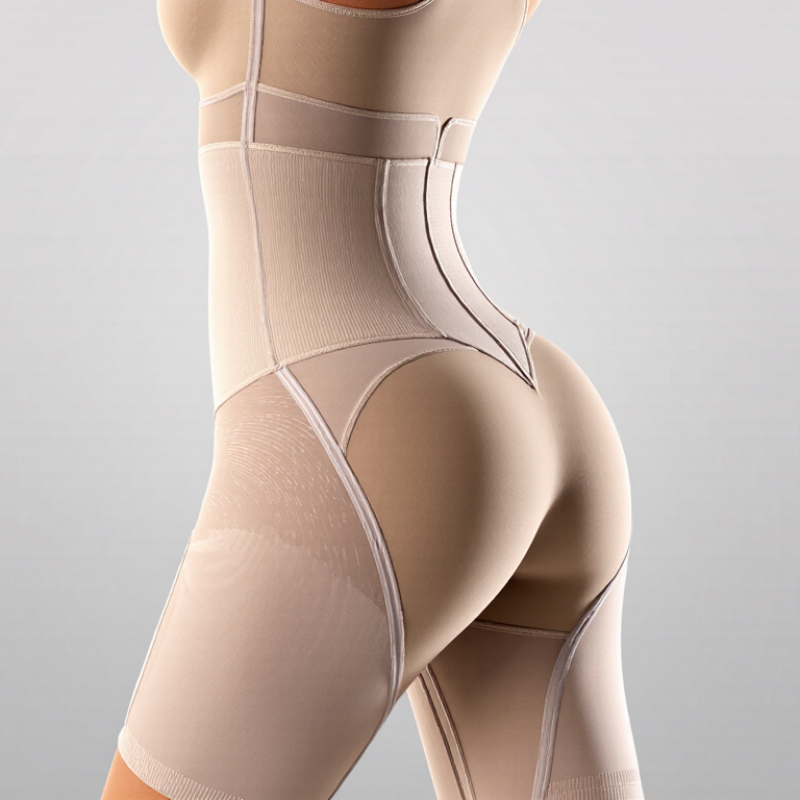
A booty-lifting body shaper is defined by how its pattern supports and frames the glute area, not simply by tight compression. Curved seams, carefully placed fabric panels, and openings or contour zones can create a more lifted appearance while leaving room for natural movement. The goal is shaping, not forcing the body into a fixed silhouette. A garment that feels restrictive may look supportive on a hanger but prove uncomfortable after an hour of sitting.
Material choice matters. Stretch fabric should recover after wear, and seams should lie smoothly against the skin without digging in. A stable waistband can help reduce rolling, while breathable sections may improve comfort during daily use. Small details count.
For a manufacturer, defining the product means testing fit across different sizes and body shapes, then checking whether the garment stays in place during walking, bending, and sitting. Measurements alone are not enough; wear trials can reveal pressure points that a flat pattern misses. Results vary from person to person, and no single design suits everyone. That limitation deserves more attention in product development. A reliable shaper should describe its level of compression clearly and avoid promising a dramatic or permanent change to body shape.
How Booty-Lifting Shapers Support and Shape the Body
How Booty-Lifting Shapers Support and Shape the Body
Booty-lifting shapers use strategically placed seams, stretch panels, and supportive fabric to create a temporarily more defined silhouette. A curved seam beneath the buttocks can visually lift the shape, while firmer fabric around the waist and hips helps smooth clothing lines. That sounds simple. Fit is not. If the garment digs into the skin or shifts when you sit, its design may not suit your body. It should feel secure, not restrictive, and allow comfortable movement and breathing.
Grand View Research’s 2022 shapewear market report estimated the global market at USD 2.26 billion, with projected annual growth of 7.7% from 2023 to 2030. This indicates strong consumer interest, but market growth is not proof that a garment permanently changes body shape. The effect is cosmetic and depends on cut, fabric tension, and individual fit. For a practical check, sit, walk, and bend before wearing one for a long stretch. Look for smooth seams and even pressure; a pinching waistband is a warning, not a shaping feature. Some designs may look convincing in a product photo but feel awkward after an hour. That deserves a second thought.
Key Materials and Construction Features
A lifting body shaper depends on controlled stretch, not simply firm compression. Nylon or polyester blended with elastane can provide recovery while keeping the fabric smooth against skin. Textile Exchange reported 124 million tonnes of global fiber production in 2023, with polyester representing about 57%. That figure reflects polyester’s wide availability, not guaranteed garment quality. Fiber percentages alone cannot prove comfort or durability.
Look for a double-layered seat panel, with shaping zones that support rather than flatten the buttocks. Power mesh can add targeted hold, while softer knit sections reduce pressure around the waist and thighs. Flat seams help limit rubbing under close-fitting clothing. Small details matter. Waistband edges should lie flat, and leg openings should resist rolling without digging into skin. This balance is difficult. A sample may look sculpted on a mannequin yet feel restrictive after several hours.
Construction claims need testing. ASTM D4964 provides a method for measuring tension and elongation in elastic fabrics; manufacturers can use it to compare stretch behavior across material lots. Repeated-wear and wash trials also help reveal seam distortion, lost recovery, or shifting panels. These checks do not guarantee a perfect fit for every body. Fit models should cover varied proportions, and measurements should be recorded consistently. One limitation remains: stronger compression can improve hold, but may reduce comfort during long wear.
China Best Booty Lifting Body Shaper Manufacturer? — Key Materials and Construction Features
Moisture regain of common fibers used in compression garments
Moisture regain is the amount of moisture a fiber absorbs from the air under standard conditions. These approximate reference values help explain material trade-offs: fiber choice affects comfort and fabric behavior, while lifting and shaping also depend on patterning, panel placement, seams, and stretch recovery. Actual values vary by fiber grade and test conditions.
How to Evaluate a Chinese Body Shaper Manufacturer
China Best Booty Lifting Body Shaper Manufacturer?
How to Evaluate a Chinese Body Shaper Manufacturer
A supplier’s product photos cannot prove consistent compression or fit. Ask for a size run, graded measurements, fabric composition, and written tolerance limits. Test samples on different body types, then check whether seams stay flat when sitting and walking. Fit matters. Grand View Research estimated the global shapewear market at USD 2.26 billion in 2023, with projected growth through 2030. That market estimate signals demand, not manufacturing quality. Verify claims with current documents and physical samples.
Tips: Request recent fabric test reports covering stretch recovery, colorfastness, and abrasion. Ask how production batches are inspected, and review anonymized inspection records. Confirm that sample fabric matches bulk-order fabric. A smooth first sample can hide inconsistent elastic tension.
Evaluate communication as carefully as construction. Send a simple specification sheet and note whether the supplier flags unclear points before quoting. Ask for production lead times, minimum order quantities, defect-handling procedures, and references you can contact. If possible, arrange an independent factory audit. Keep a signed sample and compare it with pre-shipment units. No checklist catches every fit issue; I would still allow time for another wear test.
Quality Standards, Customization, and Production Capacity
Choosing a body shaper manufacturer involves more than comparing prices. For booty-lifting styles, fabric recovery, panel placement, and seam strength affect both support and comfort. A practical quality check includes stretch-and-recovery testing, measurement checks, and inspection of stitching around high-tension areas. Fit samples should be tried in several sizes, not just one. Small differences matter.
Customization should be clear before bulk production begins. Buyers can discuss compression levels, fabric composition, waist height, hook placement, colors, labels, and packaging. The manufacturer should confirm which changes require new patterns or materials, then provide a sample for approval. Ask how size grading is checked. A polished sample does not guarantee every size will fit equally well, and that deserves careful review.
Production capacity needs evidence, not just a large monthly figure. Request a realistic lead-time plan covering fabric sourcing, sampling, sewing, inspection, and packing. Ask how the factory handles defects and whether inspections happen during production as well as before shipment. Keep specifications and approved samples on record. Even experienced teams can miss a detail when orders change quickly; confirming measurements again may feel repetitive, but it can prevent costly rework.