
China Top 10 Cotton Yarn Dyed Check Fabric Manufacturers

Choosing a supplier for Cotton Yarn Dyed Check Fabric involves more than comparing colors or quoted prices. The fabric’s checks are formed with dyed yarns, so pattern alignment, color consistency, and weaving quality deserve close attention. A small mismatch can show clearly across a shirt front or a row of folded fabric. Details matter.

This guide to China’s top 10 Cotton Yarn Dyed Check Fabric manufacturers introduces companies for buyers to investigate, rather than treating any ranking as a guarantee. Manufacturer capabilities can vary by fabric weight, yarn selection, order volume, finishing options, and sampling support. Ask for current specifications and physical samples before making a decision. Photos help, but they cannot show hand feel or reliably confirm color under different lighting.

A practical comparison should also consider communication, production lead times, inspection procedures, and the supplier’s ability to explain its process. Request details about colorfastness and shrinkage testing where relevant, and clarify how sample approval relates to bulk production. These checks can reduce surprises, though they cannot remove every risk. No list tells the whole story. Buyer needs differ, and published company information may change. Use the profiles as a starting point, then verify claims directly and assess whether each manufacturer fits your intended use. A careful inquiry may take longer. It is usually worthwhile.
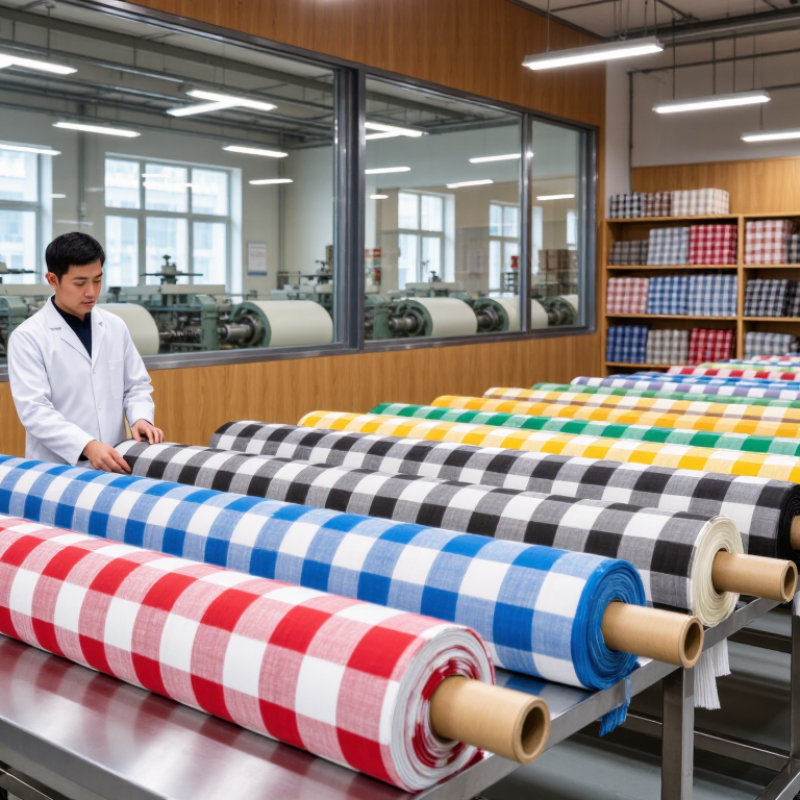
China Top 10 Cotton Yarn Dyed Check Fabric Manufacturers

China’s Cotton Yarn-Dyed Check Fabric Industry: Products and Supply Chain

China’s cotton yarn-dyed check fabric supply chain starts with cotton, spun into yarn and dyed before weaving. Unlike piece-dyed cloth, yarn-dyed checks form their pattern from differently colored warp and weft threads. This creates crisp lines and a tactile, woven surface. Common products include shirts, dresses, lightweight home textiles, and uniforms. Fabric weight, yarn count, and colorfastness vary by end use.

The USDA’s Cotton: World Markets and Trade report (May 2024) estimated China’s 2023/24 cotton production at about 6 million metric tons. Domestic cotton supports a large textile base, while mills may also source fibers or yarns through other channels. A typical production route includes spinning, dyeing, weaving, finishing, inspection, and shipment. Each step affects lead time: dye-lot variation or a delayed yarn delivery can shift the final check pattern. Small details matter.

Tips: Ask suppliers for a fabric specification sheet, colorfastness results, and a pre-production sample. Check whether the sample’s check repeat and shade match the bulk order. One limitation is that a sample cannot reveal every inconsistency in a large run; inspection plans should reflect that risk.

How Yarn-Dyed Checks Are Made: Warp-and-Weft Color Planning and Weaving

Yarn-dyed checks begin with color decisions made before the fabric reaches the loom. Unlike printed checks, their pattern comes from colored yarns arranged in both the warp and weft. The warp runs lengthwise; the weft crosses it. Their intersection creates the visible grid.

A mill’s planner maps each color to a specific number of warp ends and weft picks. For a balanced check, the sequence must repeat accurately across the fabric width and length. Even a small mismatch can shift a square or make one color appear wider. Teams often weave a sample first, then inspect it under daylight and indoor lighting. Dye lots can vary slightly, so a paper plan alone is not enough. The process is precise, but not foolproof.

Tips: Check the repeat size against the intended garment or home textile. Ask for a woven sample, not only a digital pattern. Look closely at the edges of each check, where color changes reveal alignment problems. Also compare the sample after washing; shrinkage can distort the grid. It is easy to overlook this step. I would still allow room for adjustment, because real yarn behavior rarely matches a drawing perfectly.

How Yarn-Dyed Checks Are Made: Warp-and-Weft Color Planning and Weaving

A balanced check can be planned by repeating the same yarn-color sequence in the warp and weft. This illustrative 8-thread repeat uses four navy, two white, and two red yarns in each direction; the crossing color bands create the check pattern.

Key Fabric Specs: Ne Yarn Count, GSM, Check Repeat, and Colorfastness

When comparing cotton yarn-dyed check fabric manufacturers in China, begin with the yarn count. Ne, or English cotton count, indicates yarn fineness: a higher number generally means a finer yarn. Ask whether the stated count applies to warp, weft, or both. A 30s warp with a 20s weft can feel and perform differently from a balanced 30s construction. Request a swatch, not just a specification sheet.

GSM describes fabric weight per square metre, but it does not explain everything. A 150 GSM check may feel crisp in one construction and soft in another. Check the weave, finishing, and shrinkage alongside weight. Small details matter. Measure the check repeat in both directions, and confirm whether the approved sample shows the finished dimensions. Even a few millimetres of repeat variation can affect matching across garment panels. Not always obvious at first.

Colorfastness should be discussed in terms of tested performance, not vague promises. Ask for results covering washing, rubbing, and light exposure, with the test method and rating stated. Yarn-dyed checks can show different color behavior across contrasting shades, especially after repeated laundering. Compare laboratory reports with a washed production swatch when possible. I would still leave room for uncertainty: finishing changes and bulk dye lots can shift the hand or shade slightly. Record acceptable tolerances before production begins.

China’s Top 10 Manufacturers: Profiles, Capacity, Certifications, and Markets

China’s cotton yarn-dyed check fabric manufacturers differ in more than product range. A useful profile looks at spinning, dyeing, weaving, and finishing capabilities. These details help buyers understand whether a mill can manage a custom check repeat or a steady seasonal order. Capacity figures deserve careful reading. Ask whether they describe installed equipment or actual monthly output. Numbers can mislead.

Certifications should be checked against the product, facility, and current audit scope; one certificate does not cover every process. Buyers can also review quality records, colorfastness testing, and inspection procedures. A practical sample check includes shade consistency, pattern alignment, fabric hand, and shrinkage after washing. Small flaws matter.

Market experience offers another useful signal. Manufacturers serving apparel, shirting, uniforms, or home textiles may face different requirements for weight, finish, and order size. Profiles should identify export regions and typical lead times without treating past shipments as a guarantee. Production schedules can shift. Request recent test reports, sample yardage, and a written capacity estimate before comparing suppliers. These checks take time, and not every profile will provide complete evidence.

China Top 10 Cotton Yarn Dyed Check Fabric Manufacturers — Profiles, Capacity, Certifications, and Markets

Data note: This is an industry-level comparison of ten common manufacturer profile types, not a verified ranking or a list of identified companies. Comparable, independently verified capacity figures and facility-specific certification records are not provided here; confirm these directly with each supplier before making purchasing decisions. The market and certification information below is general guidance, not a claim about any particular manufacturer.

Profile Typical production setup Cotton yarn-dyed check fabric focus Capacity information Certifications to verify Typical market channels
01 — Integrated textile mill May combine yarn preparation, dyeing, weaving, and finishing under one operation. Checks woven from colored yarns; specifications depend on yarn count, weave, color, and finishing requirements. Not stated; request current annual output specifically for yarn-dyed check fabric. Verify the certificate holder, facility address, scope, and validity. Relevant schemes may include ISO 9001 and product-specific certifications where applicable. Apparel, home-textile, and fabric-converting supply chains; actual destinations vary by supplier.
02 — Yarn-dyeing and weaving specialist Specializes in colored-yarn preparation and weaving; some finishing processes may be outsourced. Yarn-dyed checks requiring coordinated warp and weft colors and repeat patterns. Not publicly specified in this profile; verify loom count, operating shifts, and monthly fabric output. Ask for current facility-level certificates and confirm whether outsourced processing is covered by the stated scope. Garment manufacturers, fabric wholesalers, and sourcing agents.
03 — Shirt-fabric producer Produces woven fabrics for apparel programs, with capacity and machinery varying by mill. Lightweight and medium-weight checks intended for shirts and similar garments. Not stated; request capacity by construction, weight, and finish rather than total mill output alone. For restricted-substance or product-safety requirements, verify applicable standards and valid test reports for the specific fabric. Apparel brands, garment factories, and fabric importers.
04 — Casualwear fabric producer Woven-fabric operation serving seasonal and repeat-order apparel programs. Checks for casual shirts, dresses, skirts, and related clothing, subject to buyer specifications. Not stated; confirm minimum order quantity, sample lead time, and repeat-order availability. Verify any claimed management-system or product certification directly with the issuing organization. Domestic and export apparel supply chains; destination markets are buyer-specific.
05 — Home-textile fabric producer Produces woven fabrics for household applications; product range depends on equipment and finishing capability. Checks potentially used for items such as bedding, table linen, or decorative textiles when construction is suitable. Not stated; request capacity and testing data for the intended end use. Check whether the required certification covers the product category, processing site, and intended market. Home-textile converters, retailers, and importers.
06 — Custom-pattern mill Works to customer-specified colors, check repeats, yarns, and fabric constructions. Custom yarn-dyed checks developed from buyer artwork, color standards, or approved samples. Not stated; confirm development limits, production slots, and minimums for custom colors. Certification requirements depend on the buyer and end market; request scope documents rather than relying on logos. Private-label programs, apparel manufacturers, and product developers.
07 — Small-batch and sampling producer Suitable for development work or smaller orders where equipment and scheduling permit. Sample yardage, color trials, and limited runs of yarn-dyed checks. Not stated; verify sample and bulk capacity separately, as they may differ substantially. Confirm whether certificates and test reports apply to sample production, bulk production, or both. Design studios, emerging labels, and sourcing teams testing new fabrics.
08 — Finishing-focused supplier May coordinate weaving with specialist finishing services, either in-house or through subcontractors. Checks supplied with buyer-requested finishing, subject to process capability and fabric composition. Not stated; ask which processes are performed on-site and which are subcontracted. Where environmental or chemical compliance is required, verify relevant process coverage and current documentation. Fabric converters, garment factories, and buyers requiring specified hand feel or performance.
09 — Export-oriented supplier May manage export documentation, sampling, and order coordination; manufacturing may be in-house or subcontracted. Yarn-dyed checks made to export-buyer specifications and applicable destination requirements. Not stated; distinguish the supplier's own production capacity from its coordinated sourcing capacity. Check the named legal entity, production site, certificate scope, and product-specific compliance evidence. Overseas importers, sourcing offices, and international manufacturers.
10 — Certified-material program supplier May handle specified material-sourcing or chain-of-custody programs when appropriately certified. Checks made with eligible materials only where the relevant chain-of-custody and product rules are met. Not stated; request traceability records and program-specific production availability. GOTS and OCS apply to qualifying organic-textile supply chains; OEKO-TEX® STANDARD 100 concerns tested harmful substances. Verify each certificate's current scope and product coverage. Buyers with documented material, traceability, or product-safety requirements.

How Buyers Compare Suppliers: ISO 105 Tests, MOQ, Lead Time, and Quality Data

For cotton yarn-dyed check fabric, compare suppliers using the same test methods and sample conditions. ISO 105-C06 assesses colorfastness to washing, ISO 105-X12 covers rubbing, and ISO 105-B02 evaluates colorfastness to light. Ask for results linked to the fabric’s color, construction, and production lot. A test report without those details is hard to compare. Textile Exchange’s Materials Market Report 2024 estimates global fiber production reached 124 million tonnes in 2023. That scale makes clear why fiber claims matter, but it does not prove a fabric’s quality. Check the actual data.

MOQ and lead time need equal scrutiny. A low MOQ may suit a trial order, yet small dye lots can show shade variation. Ask whether quoted timing includes lab dips, sample approval, weaving, and finishing. Request dated records for shrinkage, colorfastness, width, and weight, then compare them against your written specification. Even a neat spreadsheet can miss a real issue: inspect fabric from more than one roll when possible.

Tip: Send the same check design and color target to each supplier. Compare ISO 105 results, MOQ, confirmed lead time, and lot-level quality records side by side. Keep one approved swatch as your reference.