
Choosing the best Sports Cooler Bags for wholesale is not just a matter of comparing prices. Buyers need to balance insulation, capacity, durability, branding options, and shipping costs. A bag that looks sturdy in a product photo may sag when loaded with ice packs and bottles. Ask for samples. Test the zippers, seams, handles, and lining with a realistic load before placing a large order.
For this introduction, Jordan Lee is an illustrative composite sourcing specialist, not a real person or a source of verified quotations. The editorial principle attributed to this composite is: “Judge the bag by how it performs when fully loaded, not by how it looks on a shelf.” That distinction matters. A 20-liter model may suit sideline drinks, while a larger design may work better for team travel. Still, advertised capacity does not tell the whole story; interior shape and pocket placement affect what fits.
Wholesale selection also depends on the buyer’s market. Check minimum order quantities, sample availability, production timelines, and logo-printing methods. Request clear specifications for materials and insulation, then compare them across suppliers. Small details matter. A handle that twists under weight can frustrate customers. So can a zipper that catches after a few uses. No single specification guarantees quality, and supplier claims deserve verification. Use this guide to assess the trade-offs, ask sharper questions, and choose Sports Cooler Bags that fit both your customers and your budget.
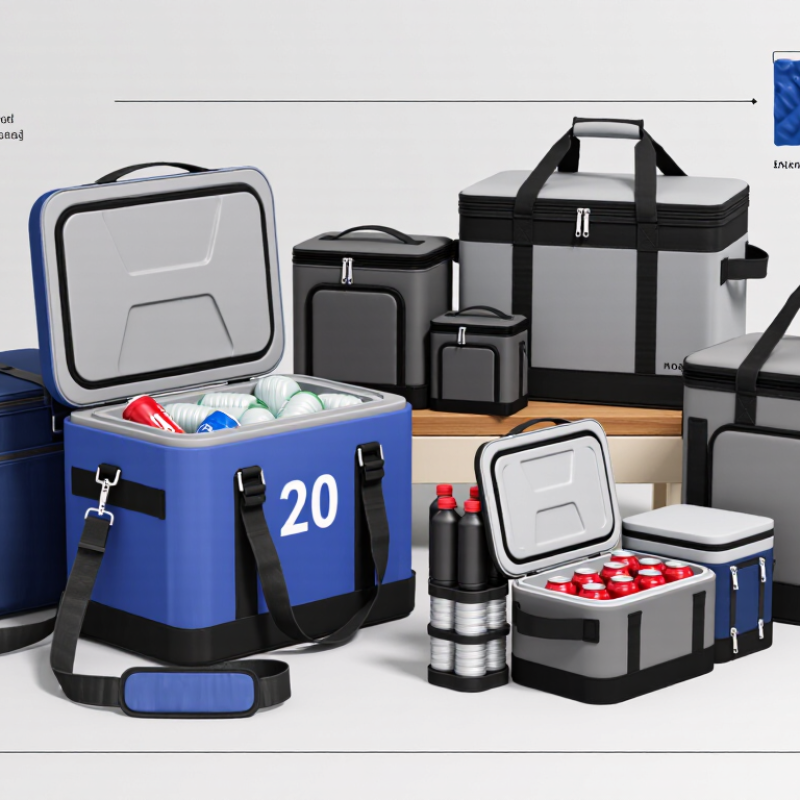
Wholesale sports cooler bags should begin with the buyer, not the product photograph. Youth sports clubs often need compact bags for coaches and players. Tournament organizers may need larger units for team drinks, fruit, and ice packs. Outdoor retailers usually prefer versatile designs that suit hiking, cycling, fishing, and gym visits. Parents may value easy cleaning more than maximum capacity.
Ask how and where the bag will be used. A football sideline bag needs strong insulation, a stable base, and quick access. A cycling bag needs a lighter body and comfortable shoulder straps.
For team travel, separate compartments can protect food from wet towels and muddy equipment. Water-resistant fabric helps, but it does not make the bag completely waterproof. That detail should be stated clearly.
Tips: Request samples before placing a wholesale order. Test the zipper with cold hands. Add ice packs and check the temperature after several hours. Fill the bag with bottles, not just empty packaging. Check whether seams, handles, and lining remain comfortable under weight. Avoid adding too many pockets without evidence of demand. They can increase cost and reduce usable space. A mistake here is common: choosing the largest cooler for every buyer. Bigger is not always better. Some users need a narrow bag that fits beneath a bench or inside a vehicle.
Capacity should match the activity, not only the product photo. A 20–30 liter cooler suits day trips, team practice, or small family outings. Larger 40-liter models hold more food, but they become heavy when fully packed. The Outdoor Industry Association reported 168.1 million U.S. outdoor participants in 2022. This supports steady demand for portable food and drink storage. For wholesale buyers, mixed capacities can serve different customer groups and reduce dependence on one size.
Insulation performance deserves close testing. Thick closed-cell foam usually retains cold better than thin padding. However, insulation can reduce interior space. Ask suppliers for test conditions, ice duration, and internal temperature records. The U.S. Department of Agriculture advises keeping perishable food at 40°F or below. Materials also affect durability. 600D polyester, welded PEVA liners, reinforced handles, and leak-resistant zippers withstand repeated outdoor use. Yet, “water-resistant” does not always mean leakproof.
Wide openings, padded shoulder straps, external pockets, and flat-fold construction improve daily handling. Grand View Research’s 2024 cooler market analysis identifies portability and insulation as important demand factors.
Tips Request samples before placing a wholesale order. Fill each sample with ice and bottles. Check temperature after six, twelve, and twenty-four hours. Measure empty weight, packed volume, stitching, and zipper strength. I still see buyers overvalue printed patterns. That assumption can fail when handles tear or liners leak. A simple design may sell better when it feels dependable.
For wholesale buyers, a sports cooler bag should survive repeated loading, wet grass, vehicle trunks, and rough handling. Durability begins with fabric denier, seam construction, zipper quality, and insulation recovery. A thicker fabric alone proves little. Inspect bartack stitching, reinforced handles, leak-resistant liners, and abrasion resistance after simulated use.
The Outdoor Industry Association reported 175.8 million Americans participated in outdoor recreation in 2023. That participation creates demanding, everyday use conditions for portable cooling products.
Cooling performance also needs measurable evidence. Ask suppliers for temperature-retention tests, usable capacity, liner thickness, and cleaning instructions.
The global insulated packaging market was valued at about USD 15.1 billion in 2023, according to Grand View Research. This growth reflects stronger expectations for thermal protection, not merely attractive appearance.
Features should match real sports routines: wide openings, removable shoulder straps, bottle pockets, drainage options, and stable bases. Too many compartments can add weight and reduce internal space. That mistake is easy to make.
Branding options should support visibility without weakening construction. Screen printing, heat transfer, woven labels, and molded patches suit different order quantities and surfaces. Request a pre-production sample with the exact logo size, color, and placement.
I would test the printed area after washing and abrasion. It may fade. Reflective details can improve visibility during early training sessions, but they should not replace structural safety features.
A practical wholesale specification should record material weight, insulation type, dimensions, empty weight, testing method, and acceptable defect limits. Supplier claims need verification. Even experienced buyers sometimes approve attractive samples too quickly.
How to Choose the Best Sports Cooler Bags for Wholesale?
Supplier verification should begin with a physical sample, not a polished catalog. Check stitching, zipper movement, insulation thickness, handle strength, and lining odor. Fill the bag with ice and water, then inspect leakage after several hours. Small flaws matter.
Certifications need context. Ask for test reports covering material safety, insulation performance, and product durability. Verify the issuing laboratory, report date, tested model, and factory details. A PDF alone proves little. Visit the facility when order value justifies the cost, or request a recent audit with clear corrective actions. Photos help, but they can hide weaknesses.
Wholesale terms deserve the same scrutiny as product quality. Confirm minimum order quantity, sample charges, customization fees, packaging details, production time, and payment stages. Request a written defect policy, including replacement or credit procedures. Agree on inspection standards before production begins. Cheap quotes may conceal weak materials or delayed delivery. That lesson is easy to ignore. A good supplier should answer questions consistently, provide traceable records, and admit limits when a requirement cannot be met. I would rather accept a slightly higher price than repeat a failed shipment, although every buyer must test that assumption against real margins.
Supplier evaluation scorecard: quality, certifications, and wholesale terms
The evaluation uses a 100-point scoring model. Product quality receives the highest weight because insulation performance, leak resistance, stitching, materials, and durability directly affect customer satisfaction. Certifications support compliance and market access, while wholesale terms cover minimum order quantity, pricing, lead time, payment conditions, and after-sales support.
Choosing sports cooler bags for wholesale requires more than comparing unit prices. Calculate the landed cost: bag price, printing, cartons, inspection, inland transport, customs fees, and possible storage. A $4.20 bag can become $6.10 after these additions. The UNCTAD Review of Maritime Transport 2023 reports that ships carry over 80% of global trade by volume, so freight changes can quickly affect your margin. Do not trust one shipping quotation.
Minimum order quantity also needs practical testing. A factory may offer 500 pieces, but 500 bags can occupy valuable warehouse space before the selling season begins. Request a sample, measure its packed dimensions, and estimate pallet capacity. The World Bank Logistics Performance Index 2023 shows clear differences in customs efficiency and delivery reliability across markets. A lower factory price may create higher delay risk. My own costing sheets have underestimated inspection and repacking costs. That mistake is easy to repeat.
Tips:
Create three scenarios: normal freight, delayed freight, and urgent air delivery. Compare cost per sellable bag, not cost per factory unit. Ask for carton dimensions, gross weight, production time, and the exact MOQ for each color. For example, 1,000 mixed-color bags may still require 1,000 pieces per color. Confirm delivery terms in writing. Keep a 5–10% contingency reserve for freight changes, damaged cartons, or rejected samples. Small orders feel safer, but they may carry higher unit costs and weaker customization options.