
What Are Composite Pickleball Paddles Made Of?

Composite Pickleball Paddles are built from layered materials, not one single substance. Most combine a hitting surface with a lightweight internal core, then add an edge guard and handle. The exact recipe varies by brand and model. That variation matters.

The face is often fiberglass, carbon fiber, or another engineered fiber layer. Fiberglass can provide a lively feel and accessible price, while carbon fiber is commonly chosen for stiffness and controlled response. These are general tendencies, not guarantees; resin, weave, thickness, and manufacturing quality also affect performance. The core is often a honeycomb structure made from polymer, Nomex-type paper, or aluminum. Polymer cores are widely used because they balance weight, sound, and durability. Still, “composite” is a broad label. It can be confusing.

This guide looks at what each layer does, how materials influence touch, power, and durability, and which specifications deserve a closer look. A paddle’s feel comes from the whole construction, including its thickness, surface texture, and grip. Small details can change play. Product descriptions may also use material terms loosely, so compare specifications carefully and check the maker’s documentation. No material is best for every player. A softer response may suit one style, while another player may prefer a firmer, faster rebound. The useful question is not just what a paddle is made of, but how those materials work together on court.
What Are Composite Pickleball Paddles Made Of?

What Defines a Composite Pickleball Paddle?

What Defines a Composite Pickleball Paddle?

A composite pickleball paddle combines different materials to create its playing surface and internal structure. The face may use fiberglass, carbon fiber, or another reinforced material, while the core is often a lightweight polymer honeycomb. These layers are bonded together rather than made from one solid piece. The exact mix varies.

That combination affects how the paddle feels during contact. A fiberglass face may feel lively, while a stiffer carbon-fiber surface can offer a more controlled response. But material alone does not determine performance. Core thickness, surface texture, paddle shape, and how firmly the layers are joined also matter. Small design changes can be noticeable.

Look closely at the edge and face. You may see a thin surface layer over a honeycomb core, with an edge guard protecting the sides. Tap the face gently; the sound can hint at its construction, though it is not a reliable test. Feel the grip, too. It should sit comfortably in your hand. Materials are only part of the story. Even experienced players can disagree about which feel is best, and I would not judge a paddle by its label alone.

What Are Composite Pickleball Paddles Made Of? — What Defines a Composite Pickleball Paddle?
Paddle Part Common Materials Purpose What to Know
Face (surface layer) Fiberglass or carbon fiber; some paddles use other fiber-reinforced or textured surface materials Contacts the ball and contributes to feel, ball response, and surface texture. Fiberglass faces are often associated with a lively feel, while carbon-fiber faces are commonly selected for stiffness and control. Performance also depends on the core, construction, and surface finish.
Core Usually a honeycomb structure made from polypropylene; other constructions include aramid paper or aluminum honeycomb Provides the paddle’s internal structure and influences weight, feel, and impact response. Polymer honeycomb is widely used. Core material, cell design, and thickness vary, so the material alone does not determine how a paddle plays.
Bonding layer Adhesive or resin systems used to join the face and core Holds the paddle’s layered construction together. The precise bonding materials and manufacturing methods differ by paddle. A composite paddle is generally defined by combining different materials in its construction.
Edge protection Commonly a molded polymer, such as ABS or another impact-resistant plastic Protects the paddle’s perimeter and helps cover the edge of the core. Some paddles have a visible edge guard; others use an edge-less or perimeter-weighted construction.
Handle and grip Structural handle materials may include wood, polymer, or composite components; grips are commonly cushioned synthetic materials Provides a secure place to hold the paddle and connects the grip area to the paddle body. Handle shape, grip circumference, and cushioning affect comfort. These parts are separate from the face-and-core combination that forms the playing surface.
Overall composite construction A combination of a face material, a structured core, and supporting components Creates a paddle with multiple materials serving different structural and playing functions. “Composite” does not refer to one standardized recipe. The face and core materials, layer arrangement, and construction can differ from one paddle to another.

Materials Used in the Paddle Face

A composite pickleball paddle face is usually built from thin fiber layers bonded with resin. The most common materials include fiberglass, carbon fiber, and other graphite-like fibers. “Graphite” is sometimes used loosely, so it does not always identify a precise material. The face is separate from the honeycomb core beneath it.

Fiberglass faces tend to flex slightly on impact, which can help return energy to the ball. Carbon-fiber faces are often stiffer and may offer a more direct feel. Neither material guarantees better control or power; paddle thickness, core design, surface texture, and player technique all matter.

Small details matter.

Many faces have a textured finish or a bonded coating that helps the ball grip briefly during contact. That can support spin, but texture alone does not determine how much spin a player produces. The ball’s condition, swing path, and contact point play a part. A rough-looking face may also wear smooth with use, changing its feel over time.

That is easy to overlook. Comparing paddles by material name alone can be misleading, and published descriptions may not explain the full face construction. Checking the surface under good light and testing its feel can offer useful clues, though neither tells the whole story.

Core Materials and Internal Structure

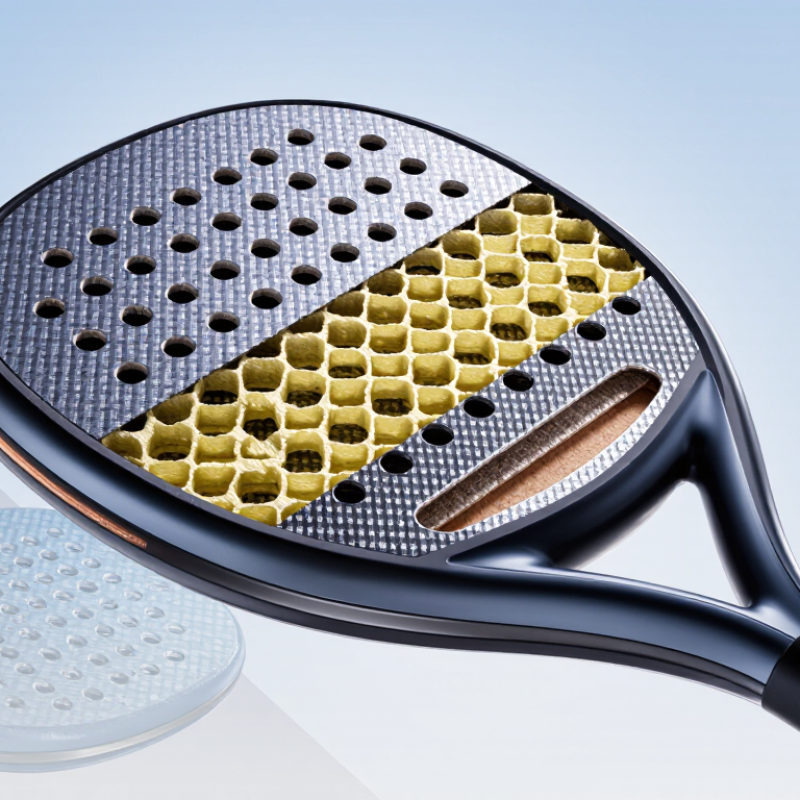
A composite pickleball paddle is usually a layered structure, not a solid slab. Its center often uses a honeycomb core made from polymer, while thin fiberglass or carbon-fiber faces are bonded to both sides. The cells trap air and support the face across many small contact points. An edge guard protects the exposed core, though its added weight can change how the paddle feels in hand.

Core thickness, cell size, face material, and adhesive all affect stiffness and impact feel. A softer core may absorb some vibration; a firmer face can feel more direct, but neither feature guarantees better control. USA Pickleball’s equipment rules limit paddle length to 17 inches and combined length and width to 24 inches (USA Pickleball, Official Rulebook, 2.E.1). That fixed outline leaves manufacturers to balance core depth, face layers, and edge protection. Small parts matter. A thin glue line or uneven cell wall can affect consistency, and construction details are not always visible from the outside.

Tips: Tap the face lightly and compare the sound across several spots. Notice edge weight, too. A neat surface does not prove a uniform core, so treat sound as a clue, not a test.

What Are Composite Pickleball Paddles Made Of?

Composite paddles generally pair a polymer, aluminum, or aramid-paper honeycomb core with thin fiberglass or carbon-fiber faces. Core thickness varies by model; 10, 13, and 16 mm are representative options, not a universal standard. The core helps determine the paddle’s feel, while the face contributes to stiffness and ball response.

How the Face and Core Are Joined

What Are Composite Pickleball Paddles Made Of?

A composite pickleball paddle usually pairs a thin face with a lightweight honeycomb core. The face may use fiberglass or carbon fiber set in resin. The core is often made from polymer cells. Together, these layers balance stiffness, weight, and ball feel.

How the Face and Core Are Joined

The face and core are typically bonded with adhesive or resin during assembly. Manufacturers align the layers, apply pressure, and allow the bond to set. The exact method can vary, so not every paddle is built identically. An edge guard may cover and protect the joined perimeter. A consistent bond helps the face transfer impact into the core. If the bond weakens, separation or a hollow sound may develop. A neat edge is reassuring, but it cannot prove the whole bond is sound. Small differences in feel can also come from the materials and construction, not just the adhesive.

Tips: Check the paddle’s edges for lifting or gaps. Tap different areas gently and listen for a sudden change in sound. A single test is not conclusive, though.

How Material Choices Shape Paddle Performance

Composite pickleball paddles combine a lightweight core with stronger face layers. Many use polymer honeycomb cores, covered with fiberglass or carbon fiber. The core influences cushioning and feel, while the face affects flex, stiffness, and ball response. A fiberglass face may feel lively during soft exchanges near the kitchen line. A stiffer carbon-fiber face can offer a more direct response on drives, though it does not guarantee better control. Construction matters, too.

That distinction is easy to miss. Surface texture can help a player apply spin, but texture, paddle shape, and balance all contribute to the result. A thicker core may feel more forgiving on blocks, while a thinner paddle can feel quicker through the air. These are tendencies, not promises; two paddles with similar materials may still play differently. It is tempting to treat one material as automatically superior. That shortcut overlooks a player’s swing and touch. When comparing paddles, notice how the ball feels on a soft dink, a firm volley, and an off-center hit. Small differences matter.