Top 10 Types of Adult Disposable Diapers for Global Buyers

Choosing adult incontinence products is rarely a simple matter of comparing pack sizes. Comfort, absorbency, fit, skin protection, mobility, and discreet use all influence the buying decision. This guide examines the top 10 types of adult diaposable diapers for global buyers, with attention to real purchasing conditions. A daytime user walking through a warehouse needs a different design from someone requiring overnight protection. Small details matter, including softer waistbands, secure fastening tabs, breathable side panels, and clear wetness indicators.

The product categories include pull-up underwear, tab-style briefs, overnight designs, bariatric options, gender-specific shapes, and slim products for active users. Each type offers practical strengths, but none is perfect for every body or care routine. Absorbency claims should be checked against test methods, not accepted as promises. Fit trials are essential. A product that looks suitable on a specification sheet may leak during sitting, bending, or extended travel.

Reliable global sourcing also requires more than a low factory price. Buyers should review material quality, production consistency, packaging accuracy, certifications, labeling rules, and supply capacity. Local requirements can differ significantly. Samples should be evaluated by caregivers and end users, not only purchasing teams. That step often reveals problems with adhesive strength or uncomfortable leg gathers. We will compare each type using practical evidence, supplier experience, and user-centered criteria. Some conclusions may remain imperfect, because personal preference and care needs vary widely. That uncertainty deserves honest attention.

Top 10 Types of Adult Disposable Diapers for Global Buyers

How Adult Disposable Diapers Are Classified

Top 10 Types of Adult Disposable Diapers for Global Buyers

Adult disposable diapers are classified by structure, absorbency, fit, and intended use. The ten common types include pull-up pants, tab-style briefs, belt-style diapers, high-absorbency night diapers, daytime light-absorbency diapers, bladder-control pads, booster pads, bariatric briefs, shaped anatomical briefs, and disposable underpads. These categories overlap. A night brief may also be bariatric, so buyers should check technical specifications carefully.

Grand View Research estimates that the global adult diapers market will continue growing strongly through 2030. The United Nations reported about 761 million people aged 65 or above in 2021, creating wider demand for accessible continence products. Absorbency should be measured through test methods, not marketing language alone. Buyers should review liquid capacity, rewet performance, leakage barriers, core composition, and size tolerance. Product evaluation becomes more reliable when samples are tested in realistic positions, including sitting, walking, and sleeping. I have found that packaging claims sometimes simplify difficult measurements. That deserves caution.

Tips: Match the type to the user’s mobility and changing routine. Pull-ups suit independent users, while tab-style briefs support assisted changes. Underpads protect beds and chairs, but they do not replace a properly fitted brief. Request test reports, material declarations, and size charts before importing. Also confirm local labeling and disposal requirements. Availability can vary by region.

The Ten Main Types of Adult Disposable Diapers

Top 10 Types of Adult Disposable Diapers for Global Buyers

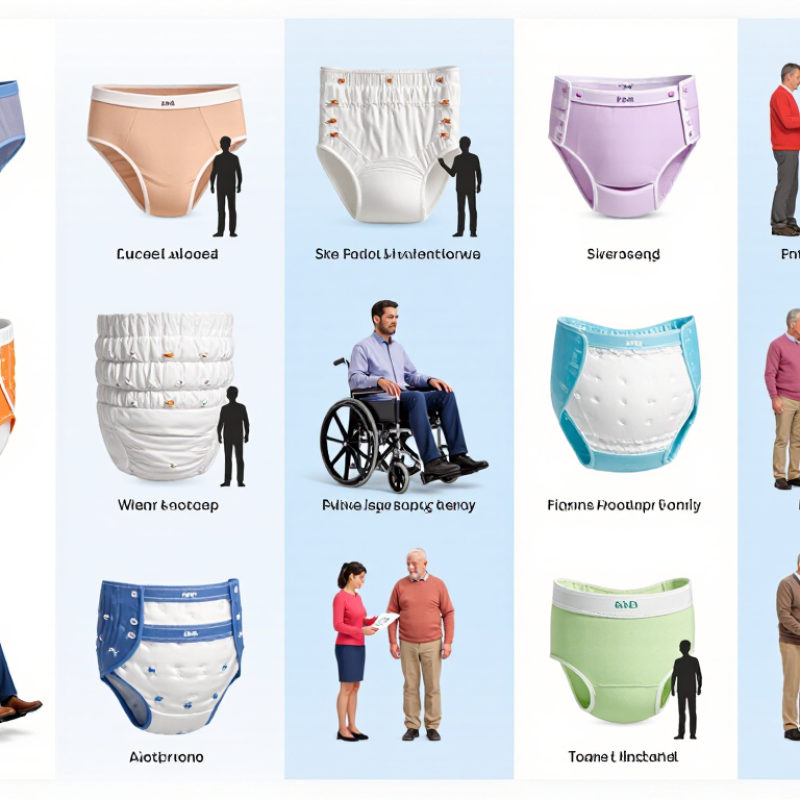
The ten main types of adult disposable diapers serve different mobility, leakage, and care needs. Tab-style briefs suit bedbound users because caregivers can open them without standing assistance. Pull-on underwear works better for mobile adults who manage toileting independently.

High-absorbency overnight briefs provide longer protection, while light-absorbency underwear supports minor bladder leaks. Bariatric briefs require wider waist ranges and stronger side panels. They should not be treated as ordinary large sizes.

Fecal-incontinence briefs need faster moisture capture and secure containment. Gender-specific designs may improve fit around the waist and leg openings, although the distinction is sometimes overstated.

Disposable swim diapers use leak-resistant materials for controlled water activities, but they are not designed for heavy urine absorption.

Youth and small-size briefs support older children or smaller adults. Skin-sensitive briefs focus on softer topsheets, breathable back layers, and reduced fragrance.

Odor-control versions use absorbent cores and neutralizing materials, but performance varies with changing frequency.

A 2023 United Nations World Social Report estimates that people aged 60 and above will reach 1.4 billion by 2030. This demographic shift is increasing demand for reliable continence products.

Grand View Research also identifies absorbency, distribution, and home-care use as major market factors in its adult diapers market analysis. Buyers should compare core capacity, leakage testing, sizing accuracy, packaging language, and disposal requirements.

The categories overlap. That is the difficult part. Data sheets can look precise, yet real users move, sweat, sleep, and change position differently.

Absorbency, Fit, Materials, and Protective Features

Top 10 Types of Adult Disposable Diapers for Global Buyers

Absorbency, Fit, Materials, and Protective Features

Global buyers now compare pull-up underwear, tab-style briefs, overnight diapers, bariatric designs, and booster-insert systems. Grand View Research estimated the adult diapers market at about US$19.82 billion in 2023, with continued growth through 2030. UN DESA’s World Social Report 2023 recorded 771 million people aged 65 or older worldwide in 2022. That demographic shift increases demand for dependable, discreet protection.

Absorbency claims need careful reading. ISO 11948-1 laboratory testing measures liquid retention under controlled conditions, not movement, pressure, or delayed changing. Overnight products usually need a higher core capacity, while lighter pull-ups suit short errands and active users. Leakage barriers should rise around the legs without leaving red marks. A good fit feels secure, not tight. Small mistakes matter.

Materials also influence comfort and skin protection. Soft nonwoven topsheets, breathable back layers, and latex-free elastic components can reduce heat and friction. Buyers should check odor-control claims, skin-contact materials, and disposal requirements. EDANA’s technical guidance stresses performance testing and responsible product assessment across hygiene products. Still, “breathable” does not mean moisture-free. I have found that sizing charts often underrepresent body shape, especially around the abdomen and thighs. Sampling several sizes remains wiser than trusting absorbency numbers alone.

Top 10 Types of Adult Disposable Diapers for Global Buyers

Representative absorbency benchmarks by product type. Actual performance depends on construction, size, fit, testing method, and user needs.

Tab-style products generally provide adjustable fit and leakage barriers, while pull-on styles support mobility and discreet daily use. Belted and bariatric designs are intended for easier changing or larger waist ranges. Common materials include cellulose fluff pulp, superabsorbent polymer, nonwoven topsheets, elastic elements, and polyethylene or breathable-film backsheet layers. Absorbency figures shown are indicative category benchmarks rather than a universal industry standard.

Choosing Diapers for Different User and Care Needs

Choosing adult disposable diapers starts with the user, not the product category. Pull-on styles suit mobile adults who manage toileting independently. Tab-closure diapers work better for users needing bed care or assisted changes. Light bladder-protection designs feel less bulky during daytime activities. Moderate and heavy-absorbency options support longer intervals, but they still require timely changes.

Overnight diapers need a secure core, soft leg gathers, and a comfortable waist. Bariatric users need accurate waist measurements and stronger side panels. For wheelchair users, a slim profile can reduce pressure while sitting. Caregivers should check wetness indicators, resealable tabs, and packaging clarity. A product sheet should state dimensions, absorbency conditions, and recommended use. Marketing language alone is not enough.

Skin condition changes the decision. Choose breathable materials and avoid excessive tightness around the thighs. In hot climates, smaller packs may reduce storage problems and moisture exposure. In colder regions, higher absorbency may simplify nighttime care. I have found that fit often matters more than impressive absorbency numbers. No selection is perfect. A diaper can perform well in testing yet leak after poor positioning. Care teams should record the user’s weight, mobility, leakage time, and skin response for several days. Then adjust size, absorbency, or fastening style. The best choice is practical, respectful, and easy to use repeatedly.

Top 10 Types of Adult Disposable Diapers for Global Buyers - Choosing Diapers for Different User and Care Needs

No. Adult Disposable Diaper Type Typical User Profile Closure and Fit Design Typical Absorbency Level Common Size Approach Main Advantages Important Selection Considerations
1 Tabbed Adult Briefs Users with moderate to heavy urinary incontinence, limited mobility, or a need for caregiver-assisted changes. Adjustable adhesive or hook-and-loop tabs; can usually be changed while the user is lying down. Heavy to Overnight Usually selected by waist or hip measurement; ranges commonly overlap between approximately 70 and 170 cm, depending on the size system. Easy for caregivers to apply, adjustable fit, and suitable for frequent checking without fully removing clothing. Check tab security, leg-gathering elasticity, leakage barriers, skin-friendly materials, and compatibility with the user’s body shape.
2 Pull-On Protective Underwear Mobile or semi-mobile adults who can stand or use the toilet with limited assistance. Elastic waistband and tear-away side seams; worn similarly to regular underwear. Light to Heavy Commonly offered in small through extra-large or extended sizes, with fit based on waist and hip measurements. Discreet appearance, comfortable for walking, and convenient for independent users. Less suitable for users who need to be changed in bed; verify the standing fit, waistband stretch, and tear-away performance.
3 Overnight Adult Briefs Adults experiencing prolonged nighttime wetting, multiple voids during sleep, or difficulty being changed frequently overnight. Usually available as tabbed briefs or high-coverage pull-on underwear with high-rise panels. Heavy to Overnight Size selection should consider waist, hip, thigh fit, sleeping position, and required coverage rather than waist size alone. Higher absorbent-core capacity, wider coverage, and enhanced leakage protection for extended wear. Absorbency ratings are not standardized globally; compare test methods, rewet performance, odor control, and recommended change intervals.
4 Light-Absorbency Protective Underwear Adults with occasional drips, light stress incontinence, or early-stage bladder leakage. Thin pull-on construction with elastic leg openings and a discreet absorbent zone. Light Often sized like underwear using waist or hip measurements; a close fit helps prevent side leakage. Lightweight, discreet under normal clothing, and suitable for daily activities. Not designed for continuous heavy leakage; select a higher absorbency product if frequent changes or saturation occur.
5 Moderate-Absorbency Adult Diapers Users with regular urinary leakage who remain partly active or need dependable daytime protection. Available in both pull-on and tabbed formats; elastic leg cuffs help contain side leakage. Moderate Usually offered in multiple sizes based on waist and hip measurements; sizing varies by manufacturer and region. Balances protection, flexibility, discretion, and daytime comfort. Consider leakage volume, change frequency, mobility, climate, and whether the product remains comfortable during sitting.
6 Heavy-Absorbency Adult Briefs Adults with frequent or larger-volume urinary leakage, reduced mobility, or a need for longer protection between changes. Most commonly tabbed briefs with reinforced waist panels, elastic leg cuffs, and a multi-layer absorbent core. Heavy Fit should be based on measured waist, hip, and thigh dimensions; an overly large size can increase leakage. High fluid-handling capacity, secure containment, and caregiver-friendly changing. Look for breathable backsheet options, strong fastening tabs, wetness indicators, and a core that distributes fluid evenly.
7 Bariatric Adult Diapers Adults requiring extended sizing because of larger waist, hip, or thigh measurements. Usually high-capacity tabbed briefs with extended side panels and multiple fastening positions. Moderate to Overnight Extended sizes may accommodate waists and hips above standard ranges; always use the product’s actual measurement chart. Greater coverage, wider fastening zones, and improved fit for larger body shapes. Do not rely on weight alone; evaluate abdominal shape, thigh circumference, standing or seated fit, and lifting or repositioning needs.
8 Gender-Specific Adult Protective Underwear Users seeking a body-contoured product designed around typical male or female anatomy. Pull-on or tabbed construction with absorbent material positioned according to the intended leakage area. Light to Moderate Usually sized by waist or hip measurement; anatomical shape is an additional fit factor. Can improve comfort and perceived discretion when the absorbent zone matches the user’s leakage pattern. Gender-specific design is not a substitute for correct sizing; compare core placement, leg fit, waistband comfort, and leakage direction.
9 Adult Fecal-Incontinence Briefs Adults requiring containment of liquid or formed stool, often with combined urinary incontinence. Typically full-coverage tabbed briefs with raised inner cuffs, secure waist areas, and caregiver-accessible closures. Containment-Focused Use waist, hip, thigh, and seat coverage measurements; a close but non-restrictive seal is essential. Designed to help contain bowel leakage and support easier cleaning and changing. Prioritize leakage barriers, odor management, skin protection, cleanability, and frequent change protocols; no disposable product prevents all leakage.
10 Adult Swim Diapers Adults with incontinence who participate in swimming, hydrotherapy, or aquatic rehabilitation. Close-fitting, water-resistant outer materials with containment-focused inner construction; generally worn under swimwear. Water-Use Containment Fit is based mainly on waist, hip, leg opening, and body-contour measurements; a snug fit is required. Helps contain solid waste in water and is designed to limit excessive water absorption. Swim diapers are not intended to replace ordinary urinary diapers and do not provide the same dry absorbency as everyday products.
Buyer note: Absorbency, dimensions, and sizing are product-specific and are not standardized worldwide. Always validate fit, leakage performance, material safety, and change requirements against the supplier’s technical documentation and applicable local regulations.

Global Buyer Factors: Standards, Sourcing, and Logistics

Top 10 Types of Adult Disposable Diapers for Global Buyers

Global Buyer Factors: Standards, Sourcing, and Logistics

Adult disposable diapers vary by use, body shape, and absorbency needs. Common options include tab-style, pull-on, overnight, bariatric, slim-fit, maximum-absorbency, moderate-absorbency, extended-size, contoured, and booster-compatible designs. Buyers should compare core weight, absorbency, rewet performance, leakage control, and fastening strength. A product may look premium but perform poorly after several hours.

Standards must match the destination market. Review material safety documents, skin-contact testing, labeling rules, packaging requirements, and quality management records. Avoid accepting vague claims such as “medical grade” without supporting evidence. Sample checks should include waist stretch, adhesive stability, odor control, and moisture handling. Test products in realistic conditions, including sitting, walking, and overnight use. Laboratory data matters. Field feedback matters more.

Sourcing requires traceable materials and stable production capacity. Ask for batch records, inspection plans, minimum order quantities, and replacement procedures for defects. A low factory price can become expensive after rework, returns, or customs delays. Logistics also deserves early attention. Diapers occupy considerable container space, especially with bulky packaging. Confirm carton dimensions, pallet patterns, humidity protection, compression limits, and port documentation before ordering. Small details matter. I would still allow extra lead time, because forecasts can be wrong and peak-season congestion is difficult to predict.