What Are the Top Types of Fiber Yarn for Global Buyers?

For global buyers, Fiber Yarn is not one universal product. Its performance depends on fiber origin, spinning method, yarn count, twist, finishing, and intended use. Cotton yarn may offer a soft hand and breathable comfort. Polyester yarn often delivers strength, quick drying, and consistent sizing. Wool brings warmth, resilience, and natural elasticity. Viscose can create a smooth drape, while nylon supports demanding stretch applications. Recycled options may reduce reliance on virgin resources, but their quality requires careful verification. The best choice depends on the fabric, market, climate, and production equipment.

A practical buying review should connect technical data with real manufacturing experience. Buyers should request samples, check color consistency, inspect evenness, and test strength before placing large orders. Confirm the yarn count, moisture regain, twist level, packing method, minimum order quantity, and lead time. Independent laboratory testing can support supplier claims, especially for recycled content, colorfastness, and restricted substances. Reliable suppliers should provide traceable documentation and explain how defects are controlled. Certifications may help, but they do not replace physical inspection. Small details matter.

No single ranking fits every factory. A low-cost yarn may create higher waste during knitting or weaving. A premium fiber may fail if its specifications do not match the machine. Even experienced buyers can overlook humidity, storage conditions, or transport exposure. This guide compares major Fiber Yarn types through performance, sourcing risk, sustainability evidence, and commercial value. Some conclusions will remain conditional. That is more honest than promising one perfect answer.

What Are the Top Types of Fiber Yarn for Global Buyers?

Fiber Yarn: Definition, Structure, and Essential Properties

What Are the Top Types of Fiber Yarn for Global Buyers?

Fiber Yarn: Definition, Structure, and Essential Properties

Fiber yarn is a continuous strand made by spinning, twisting, or combining textile fibers. It supports weaving, knitting, sewing, and technical fabric production. Unlike loose fibers, yarn has a planned internal structure. This structure includes fiber length, fineness, twist, ply, and surface hairiness. Each element changes performance. Too much twist can create a hard hand. Too little twist may reduce strength and stability.

Global buyers often compare natural, regenerated, synthetic, and blended yarns. Cotton yarn offers breathability and a familiar soft touch. Wool yarn provides warmth, resilience, and natural elasticity. Regenerated cellulose yarns can deliver a smooth surface and useful moisture management. Polyester and nylon yarns are valued for consistent sizing, abrasion resistance, and quick drying. Blended yarns are often practical. A cotton-polyester blend may balance comfort, durability, and production cost.

For Purchasing Decisions

For purchasing decisions, inspect count, tenacity, elongation, evenness, and moisture regain. These properties should match the final product and machine settings. A fine yarn may suit lightweight shirts but fail under heavy abrasion. A coarse yarn can improve durability while producing a rougher surface. Request test data, sample cones, and production records before approval. Samples can mislead. Dyeing, storage, and machine tension may change results. No fiber yarn is perfect. A strong yarn may still feel uncomfortable against skin, while a soft yarn may need better process control.

Main Types of Fiber Yarn and Their Distinctive Characteristics

What Are the Top Types of Fiber Yarn for Global Buyers?

Main Types of Fiber Yarn and Their Distinctive Characteristics

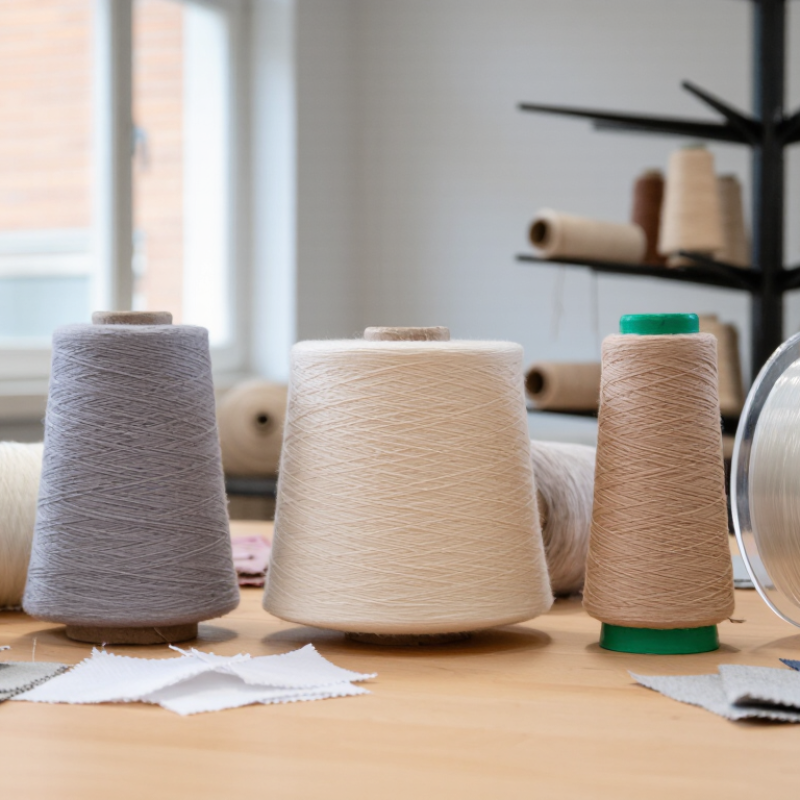
For global buyers, fiber yarn selection begins with the final product, not appearance alone. Cotton yarn offers breathability, soft touch, and good moisture absorption. It suits T-shirts, towels, and lightweight home textiles. However, cotton can wrinkle and shrink without proper treatment. Wool yarn provides warmth, elasticity, and natural temperature control. Its fine fibers feel comfortable, while coarse grades may irritate sensitive skin. Wool also needs careful washing because heat and agitation can cause felting.

Polyester yarn is valued for strength, quick drying, and stable color performance. It works well in sportswear, workwear, and upholstery. Nylon yarn adds high abrasion resistance and flexibility, making it useful for socks, bags, and technical fabrics. Acrylic yarn feels warm and light, with a wool-like appearance. It can be practical for knitwear, although pilling may appear during repeated use. Viscose yarn delivers a smooth surface and attractive drape. It absorbs moisture well, but wet strength may be lower than expected.

Blended yarns combine selected properties. Cotton-polyester blends can balance comfort, durability, and care resistance. Before purchasing, buyers should check fiber percentages, yarn count, twist, tensile strength, and colorfastness. Small sample tests are essential. A specification sheet may look convincing, yet actual fabric behavior can differ. I have found that washing, humidity, and machine settings often change the result. No fiber is perfect. The best choice depends on performance, cost, climate, and the buyer’s quality tolerance.

Top Types of Fiber Yarn for Global Buyers

Main fiber yarn types compared by standard moisture regain, a key indicator of absorbency, comfort, and drying behavior.

Cotton: Soft, breathable, absorbent, and widely used in apparel and home textiles.
Wool: Warm, elastic, and naturally insulating, with high moisture regain.
Viscose: Smooth, breathable, and absorbent with a silk-like hand feel.
Nylon: Strong, abrasion-resistant, and moderately absorbent.
Acrylic: Lightweight, warm, and wool-like, with relatively low moisture regain.
Polyester: Durable, quick-drying, and highly resistant to wrinkles and shrinkage.

Moisture regain values are typical industry reference ranges and may vary according to fiber processing, blending, and testing conditions.

Natural, Synthetic, and Blended Fiber Yarn Compared

Global buyers compare natural, synthetic, and blended fiber yarn by performance, cost, and end use. Natural fiber yarn, such as cotton, wool, and linen, offers breathability and a more familiar hand feel. Cotton works well for soft apparel and home textiles. Wool provides warmth and natural elasticity. Linen feels cool but can crease easily. I have seen buyers overlook moisture regain during sample reviews. That mistake can affect drying time, comfort, and storage. Reliable suppliers should provide fiber content, yarn count, twist details, and test records.

Synthetic fiber yarn, including polyester and polyamide, usually delivers stronger abrasion resistance and consistent production. It can dry quickly and maintain shape after repeated washing. These features suit sportswear, workwear, and durable fabrics. However, heat sensitivity, static, and environmental concerns require careful evaluation. Blended yarn combines different strengths. A cotton-polyester blend may improve comfort, drying speed, and dimensional stability. Still, the blend ratio changes the final result. A small ratio difference can alter softness, pilling, and dye behavior. No fiber wins every time.

Tips: Request samples from the same production lot. Check tensile strength, shrinkage, colorfastness, and pilling after washing. Ask for recognized laboratory reports when performance claims affect purchasing decisions. Compare yarn under actual machine settings, not only by hand. One overlooked detail: packaging moisture can distort early assessments. A lower price may look attractive, but inconsistent quality creates larger losses later.

What Are the Top Types of Fiber Yarn for Global Buyers? - Natural, Synthetic, and Blended Fiber Yarn Compared
Fiber Yarn Category Typical Moisture Regain Strength and Durability Comfort and Breathability Heat and Chemical Behavior Care and Shrinkage Considerations Biodegradability Profile Common Global Applications
Cotton Natural Approximately 7–8.5% under standard textile test conditions. Good everyday strength; stronger when wet, but moderate resistance to abrasion and prolonged sunlight. Soft, breathable, and comfortable in warm climates; absorbs perspiration but dries relatively slowly. Good heat tolerance for ironing; vulnerable to strong acids and prolonged mildew exposure. Can shrink unless pre-shrunk or treated; generally easy to wash and dye. Cellulosic and biodegradable under suitable biological conditions; finishes and dyes can affect end-of-life behavior. T-shirts, denim, bedding, towels, casualwear, workwear.
Wool Natural Approximately 14–18%, depending on fiber type and test conditions. Good resilience and elastic recovery; naturally resistant to wrinkling, but can felt with heat, moisture, and agitation. Excellent insulation and moisture buffering; comfortable across a wide temperature range. Lower ignition tendency than many fibers, but can yellow or degrade under excessive heat; sensitive to alkalis. May shrink or felt; usually requires gentle washing, controlled temperature, and careful drying. Keratin-based natural fiber and generally biodegradable; processing treatments may influence decomposition. Sweaters, suits, coats, socks, blankets, outdoor apparel.
Flax / Linen Natural Approximately 7–12%, depending on the test method and fiber preparation. Very high tensile strength; durable and increasingly soft with use, but has low elasticity and creases easily. Highly breathable with a cool, dry hand; well suited to hot and humid climates. Good resistance to moderate heat; vulnerable to strong acids and repeated sharp folding at stress points. Can shrink moderately; machine washable, but excessive tumble drying may increase creasing and wear. Plant-based cellulosic fiber and generally biodegradable when free from persistent coatings. Summer apparel, shirts, home textiles, table linen, lightweight furnishings.
Silk Natural Approximately 10–11%. High strength for its fineness, but relatively sensitive to abrasion, perspiration, sunlight, and repeated wet handling. Excellent softness, drape, and moisture comfort; naturally smooth and thermally adaptable. Moderate heat resistance; strong alkalis, chlorine, and prolonged ultraviolet exposure can damage fibers. May lose strength when wet; gentle washing, low agitation, and shade drying are generally recommended. Protein-based natural fiber and generally biodegradable under suitable conditions. Luxury apparel, scarves, lingerie, linings, ties, decorative textiles.
Viscose Rayon Regenerated Cellulosic Approximately 11–14%. Soft and absorbent, but conventional viscose has reduced wet strength and may weaken or stretch when wet. Very breathable, smooth, and comfortable; provides a fluid drape similar to some natural fibers. Moderate heat tolerance; can be damaged by strong alkalis and excessive wet abrasion. May shrink, distort, or crease; care requirements depend on yarn construction and finishing. Cellulose-based and potentially biodegradable; environmental performance depends strongly on pulp sourcing and chemical processing. Dresses, blouses, linings, soft furnishings, lightweight knitted fabrics.
Polyester Synthetic Approximately 0.4–0.8%. High strength, excellent abrasion resistance, good dimensional stability, and strong resistance to stretching. Low moisture absorption; dries quickly but may feel less breathable unless engineered with textured or wicking structures. Thermoplastic; can soften or melt at high temperatures and is generally resistant to many mild chemicals. Low shrinkage and easy care; may retain oil-based stains and generate static in dry conditions. Not readily biodegradable; mechanical or chemical recycling can reduce dependence on virgin polymer. Sportswear, fleece, uniforms, sewing thread, home textiles, industrial fabrics.
Nylon / Polyamide Synthetic Approximately 3.5–4.5%. Very high strength and abrasion resistance; excellent for high-wear applications, though ultraviolet exposure can reduce performance. Smoother and more comfortable than many synthetics; moderate moisture absorption and rapid drying. Thermoplastic with good resistance to alkalis and oils; vulnerable to strong acids and high heat. Generally easy care with low shrinkage; excessive heat can cause glazing, distortion, or melting. Not readily biodegradable; some recovery and recycling systems are available for selected polyamide streams. Activewear, hosiery, swimwear, ropes, backpacks, technical textiles.
Acrylic Synthetic Approximately 1–2%. Lightweight with good resistance to sunlight and weathering; moderate abrasion resistance and potential for pilling. Warm, soft, and wool-like; low absorbency enables quick drying but may reduce moisture comfort. Thermoplastic and highly sensitive to high heat; can soften or melt and may build static. Low shrinkage when washed correctly; use low temperatures to avoid deformation. Not readily biodegradable and may contribute to persistent microfiber release during laundering. Sweaters, blankets, knitted accessories, outdoor furnishings, craft yarns.
Cotton / Polyester
Typical 60/40 or 65/35
Blended Typically lower than pure cotton and higher than pure polyester; the exact value varies with blend ratio. Combines cotton comfort with polyester strength, dimensional stability, and improved abrasion resistance. More breathable and absorbent than pure polyester, while drying faster than pure cotton. Polyester improves heat-set stability; high ironing temperatures can still damage or shine the synthetic component. Usually lower shrinkage and easier care than pure cotton; blended-fiber recycling is more complex. Contains both biodegradable cellulosic and persistent synthetic components; end-of-life separation is difficult. Uniforms, work shirts, schoolwear, basic apparel, hospitality textiles.
Wool / Polyester
Typical 45/55 to 70/30
Blended Between the values of wool and polyester, depending on blend ratio and yarn structure. Improves wool's abrasion resistance, shape retention, and service durability while retaining selected wool properties. Warmer and more moisture-responsive than pure polyester; generally less breathable than high-wool blends. Polyester increases thermal stability, but the wool component remains sensitive to excessive heat, agitation, and alkalis. Lower felting and shrinkage risk than pure wool, but care instructions must account for both fibers. Partly biodegradable, but the polyester portion remains persistent and complicates fiber recovery. Suiting, uniforms, coats, trousers, performance and travel apparel.
Polyester / Elastane
Typical 95/5
Blended Usually low because polyester is the dominant component; exact performance depends on construction. Combines polyester durability with elastane stretch and recovery; elastane can degrade under heat, chlorine, and body oils. Stretch improves fit and movement; moisture comfort depends mainly on the polyester yarn structure and fabric design. Both components are heat-sensitive relative to natural fibers; avoid excessive heat and prolonged chlorine exposure. Low shrinkage when washed correctly; low-temperature washing and drying help preserve stretch recovery. Predominantly non-biodegradable and difficult to recycle through conventional fiber-to-fiber systems. Leggings, swimwear, sportswear, fitted garments, stretch denim, dancewear.
Data note: Moisture-regain figures are typical approximate ranges reported for textile fibers under standard atmospheric conditioning; actual results vary with fiber grade, yarn count, blend ratio, finishing, and test method. Blended-yarn performance should be verified against the specific yarn specification and applicable textile standards.

Key Applications of Fiber Yarn Across Global Industries

What Are the Top Types of Fiber Yarn for Global Buyers?

Fiber yarn selection depends on the product’s working environment. Polyester yarn remains popular for sportswear, uniforms, upholstery, and automotive interiors. Textile Exchange’s Materials Market Report 2024 estimates that polyester represented about 57% of global fiber production in 2023. Recycled polyester supports lower virgin-material use, but buyers should verify recycled content and traceability.

Cotton yarn suits shirts, towels, bedding, and baby textiles because it feels soft and absorbs moisture. Polyamide yarn offers strong abrasion resistance for socks, luggage, carpets, and protective workwear. Man-made cellulosic yarns, including viscose and lyocell, serve flowing apparel and home textiles. Technical buyers also use polypropylene and aramid yarns in filtration, ropes, geotextiles, and heat-resistant products. The Global Technical Textiles Market analysis by Grand View Research identifies transportation, construction, and industrial filtration as important demand areas. No fiber wins every test.

Tips: Request yarn counts, tensile strength, elongation, twist, moisture regain, and abrasion results. Compare samples after washing, not only before delivery. Check certification scope and factory records. A cheaper yarn may create higher waste through uneven dyeing or breakage. I have found that application data is often incomplete, so buyers should question optimistic claims. Small laboratory trials can expose problems before bulk production.

How Global Buyers Evaluate Fiber Yarn Suppliers and Quality

Global buyers compare fiber yarn suppliers by more than price. They examine yarn type, consistency, testing, and production records. Common choices include staple yarn, filament yarn, recycled yarn, and blended yarn. Each type behaves differently during spinning, dyeing, and weaving. A reliable supplier explains these differences clearly. Vague answers create early concern.

During supplier audits, buyers often request samples from several production lots. They check count, twist, strength, elongation, moisture, and color performance. A simple cone inspection can reveal uneven winding or loose fibers. Laboratory reports should identify test methods, dates, and sample numbers. Certificates help, but they are not proof by themselves. Verify the issuing body.

Experience matters here. I have seen attractive samples fail after washing. Small deviations became visible in finished fabric. Buyers should compare pre-shipment samples with delivered goods. They can also request traceability records for the raw fiber. Production capacity matters, but process control matters more. Ask how workers manage tension changes, machine cleaning, and rejected yarn. The answer should include measurable actions.

No supplier is perfect. Some quality claims need closer questioning. Buyers should record complaints, response times, and corrective actions. A supplier that admits a limitation may be more dependable than one promising everything. Even careful evaluations can miss seasonal variation. Rechecking performance after several shipments remains sensible.

Article Source: