
Why Buy Blueberry Flavored Ice Cream Powder?
Why buy Blueberry-Flavored Ice Cream Powder? Because it can bring a recognizable berry profile to a product without relying on fresh fruit in every batch. Grand View Research valued the global ice cream market at USD 79.08 billion in 2023 and projected continued growth through 2030. That report covers ice cream overall, not blueberry powder specifically, so it should not be treated as proof of demand for this ingredient. Still, it shows the scale of a category where distinctive flavors can help products stand out.
In production, a powder may offer easier storage, repeatable dosing, and simpler blending than fresh blueberries. The result depends on the formula. A sample that smells vivid in the pouch may taste muted once mixed into a cold, creamy base. Color can also shift, and sweetness may need adjustment. Small trials matter.
Food scientists H. Douglas Goff and Richard W. Hartel explain in their textbook Ice Cream that formulation and processing shape ice cream’s texture and stability. Their practical lesson applies here: flavor is only one part of a successful product. Buyers should check the ingredient list, carrier materials, solubility, and recommended dosage before ordering at scale. Ask for technical specifications and test the powder in the actual base. It is not magic. A well-chosen Blueberry-Flavored Ice Cream Powder can save handling steps and deliver consistent berry notes, but only careful testing can show whether it earns a place in the recipe.
What Is Blueberry Flavored Ice Cream Powder?
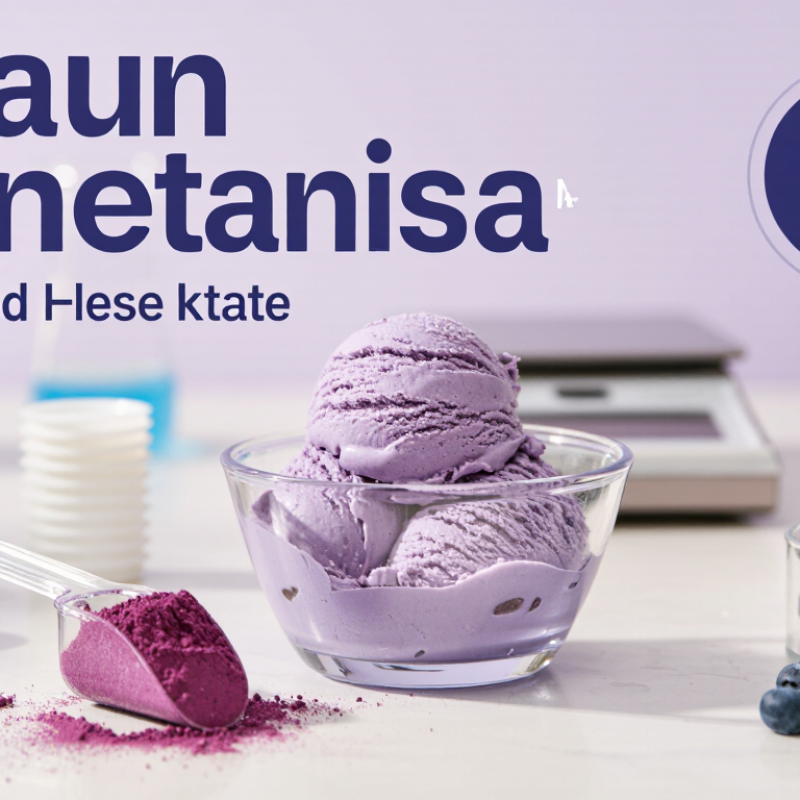
Blueberry flavored ice cream powder is a dry mix made to create a blueberry-style frozen dessert when combined with liquid. Depending on the formula, it may contain sugar, milk solids, flavorings, stabilizers, and color. Blueberry notes can come from dried fruit or juice solids, added flavor, or a combination. Recipes differ. The name alone does not tell you how much real blueberry is included, so check the ingredient list if that matters to you.
When preparing a batch, measure the powder carefully and whisk it into the recommended liquid until no dry pockets remain. A pale purple mix may deepen in color as it freezes, though appearance varies by recipe. Some mixes need chilling before churning; others are designed for a different preparation method. Follow the package directions for the best texture. That matters. Too much liquid can leave the ice cream icy, while inadequate mixing may cause uneven flavor. The result can be convenient and consistent, but it may taste less like fresh berries than expected. A small test batch helps reveal whether the sweetness and berry flavor suit your preference.
| Dimension | What It Means | Practical Value |
|---|---|---|
| Product definition | A dry mix intended to provide blueberry flavor in an ice cream or frozen-dessert preparation. Its ingredients and preparation method vary by formulation. | Offers a convenient starting point for making a flavored frozen dessert without preparing a blueberry base from scratch. |
| Typical components | Depending on the product, a mix may contain sugar, milk-derived ingredients, flavoring, color, and stabilizers or emulsifiers. Some formulations may include blueberry ingredients. | Review the ingredient list to check for dairy, allergens, sweeteners, and whether the blueberry character comes from fruit ingredients, flavoring, or both. |
| Flavor profile | Blueberry-style flavor can range from mild and creamy to more fruit-forward. The exact taste depends on the recipe and the ingredients used. | Suitable when a consistent blueberry flavor is desired in a frozen dessert, subject to testing the specific mix. |
| Color | The finished dessert’s color depends on the mix, any added fruit, and the preparation method. A blueberry flavor does not by itself guarantee a particular color. | Check the product description and ingredient information if color or the use of coloring ingredients matters. |
| Preparation | Some powders are mixed with liquid before freezing; others are formulated for a particular ice cream machine or process. Instructions differ by product. | Following the package directions helps achieve the intended texture and flavor. Do not assume all powders use the same liquid or mixing ratio. |
| Possible uses | Depending on its formulation, the mix may be used for ice cream or other frozen-dessert applications described by its supplier. | Check suitability before using it in soft serve, shakes, or other recipes, since performance can vary between applications. |
| Convenience | A dry mix can be portioned and stored before preparation, subject to its packaging and storage instructions. | May simplify preparation and help standardize batches compared with building each flavored base from separate ingredients. |
| Nutrition and allergens | Nutrition information and allergen content depend on the specific formulation. Dairy-based mixes may contain milk ingredients; other allergens may also be present. | Read the product label for serving information, ingredients, allergen statements, and any dietary claims before purchase or use. |
| Storage | Storage requirements and shelf life depend on the product and packaging. | Keep the powder sealed and follow the package instructions for storage and use-by information. |
| What to compare before buying | Compare ingredient lists, blueberry ingredients, preparation directions, intended application, allergen information, and package size. | Choosing by these details helps match the powder to the desired flavor, recipe, equipment, and dietary requirements. |