China Best Waterproof Shoes Manufacturers and Suppliers

China remains a major sourcing base for Waterproof Shoes, supported by deep footwear clusters, skilled labor, and mature material supply chains. The World Footwear Yearbook 2024 reported that Asia produced approximately 87% of global footwear in 2023. China represented the largest national share. These figures explain its strong position in outdoor, work, hiking, and lifestyle footwear manufacturing.

Market demand is also expanding. Grand View Research estimated the global footwear market at more than USD 460 billion in 2023, with continued growth expected through 2030. Waterproof footwear is only one segment, yet changing weather patterns and outdoor participation are increasing buyer interest. A reliable supplier must offer more than attractive samples. It should understand waterproof membranes, seam sealing, outsole grip, abrasion resistance, and comfort testing.

Small details matter. A factory should explain whether protection comes from a membrane, coated leather, taped seams, or construction design. It should also provide laboratory results, production photos, material traceability, and clear inspection procedures. ISO 20347 and ISO 20345 may support evaluation for occupational footwear, although requirements depend on the intended use and target market.

No supplier directory is perfect. Factory capability can change after a promising sample. Some reports also measure waterproof footwear differently, making direct market comparisons difficult. Buyers should verify certifications, production capacity, lead times, and after-sales communication before placing orders. This guide examines leading China Waterproof Shoes manufacturers and suppliers through those practical standards. It focuses on evidence, not broad promotional claims. That approach may require more time, but it reduces costly surprises.
China Best Waterproof Shoes Manufacturers and Suppliers

Overview of China's Waterproof Shoes Industry

China’s waterproof shoes industry has grown from basic rain footwear into a diverse manufacturing sector. Factories now produce hiking shoes, work boots, safety footwear, and lightweight urban styles. Production is concentrated in established footwear regions, where material suppliers, pattern makers, and assembly lines operate close together. This network can shorten development cycles and support flexible order volumes. Experience matters here. A capable factory should understand seam sealing, gusseted tongues, waterproof membranes, and outsole bonding.

Manufacturers commonly use synthetic leather, treated textiles, rubber, EVA, and breathable membranes. Each choice affects weight, grip, drying speed, and service life. Laboratory checks may include hydrostatic pressure, flexing, abrasion, slip resistance, and bonding strength.

Yet test results do not always predict daily performance. A shoe can pass a water test and still leak after repeated bending. That gap deserves attention. Buyers should request recent test records, inspect production samples, and confirm intended use before placing large orders. Clear size charts and written inspection standards reduce avoidable disputes.

The sector is also responding to demand for lower-impact materials and more efficient production. Some factories reduce solvent use, improve cutting layouts, or recycle selected scraps. Progress remains uneven. Claims need evidence. Reliable suppliers explain material sources, testing methods, lead times, and corrective procedures openly. Small trial orders can reveal workmanship, packaging quality, and communication speed. They can also expose hidden weaknesses. Regular factory audits and batch inspections provide stronger assurance than polished catalog photographs.

Key Materials and Waterproofing Technologies

China’s waterproof shoe manufacturers and suppliers commonly use treated leather, synthetic microfiber, and coated textile uppers. Full-grain leather offers strength, but it needs careful sealing around cuts and stitching. Microfiber dries faster and provides more consistent water resistance. It may feel less natural, though.

Waterproof membranes sit between the upper and lining. Microporous membranes block liquid water while allowing limited vapor movement. Non-porous polyurethane membranes work differently and often provide reliable flexibility. Seam-sealing tape closes needle holes inside the shoe. A gusseted tongue also reduces water entry around the opening. Outsoles usually combine rubber compounds with molded tread patterns for wet-ground traction. Small details matter.

Manufacturers should test finished shoes, not only individual materials. Hydrostatic pressure tests measure resistance to water penetration. Flexing tests reveal cracks around the toe box and bending points. Walking simulations can expose leaks that laboratory samples miss. A strong supplier should provide test records, production samples, and clear material specifications. However, a high laboratory score can still disappoint during long rain exposure. Fit, maintenance, and drying conditions affect performance. I have found that rushed seam work remains a common weakness. Better inspection helps, but no waterproof coating lasts forever. Repair planning deserves attention.

How Waterproof Shoes Are Designed and Manufactured

Waterproof shoes begin with a practical design brief. Designers study rain, mud, temperature, and walking surfaces before choosing materials. The upper often uses treated leather, coated fabric, or a waterproof membrane. Seams require special attention. Tiny needle holes can allow water inside. Gussets and sealed collars help protect the tongue and ankle area.

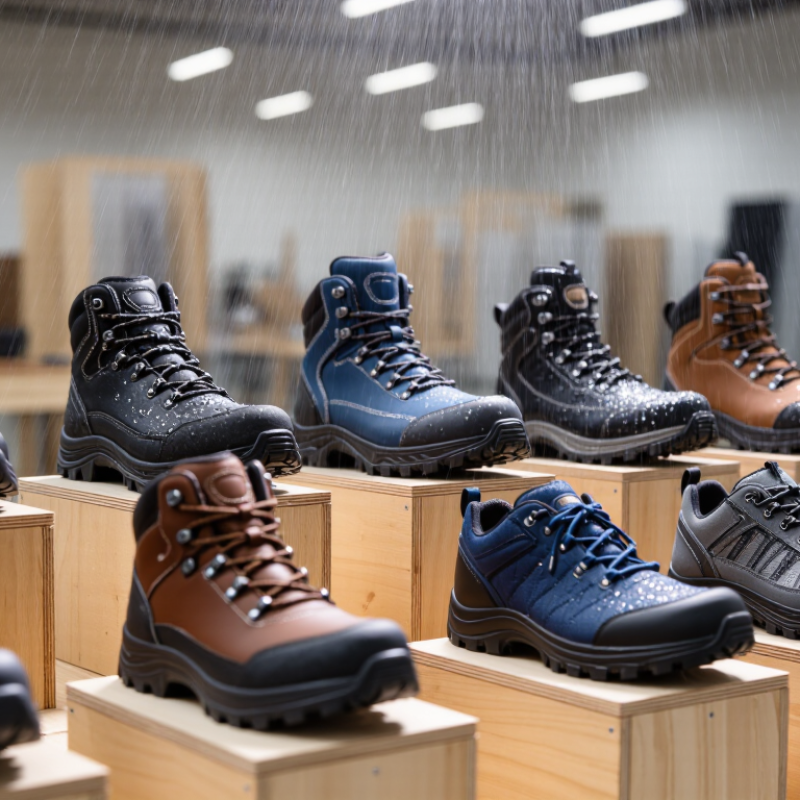
Manufacturing starts with accurate cutting and controlled stitching. Workers inspect panels before assembly. Adhesive is applied evenly around the sole connection. Some factories use heat sealing or waterproof tapes for critical seams. Each production batch should undergo flexing, water spray, and pressure testing. Realistic tests matter. A shoe may resist rain but fail after repeated bending. That weakness should not be ignored. Manufacturers and suppliers also need traceable material records, stable sizing, and clear inspection standards.

Tips: Check the tongue construction, seam sealing, outsole grip, and drainage design. Ask suppliers for test methods, not only waterproof claims. Examine sample pairs after several hours of walking. Comfort can change when thick lining absorbs moisture. A waterproof shoe is not automatically breathable. Designers should balance both functions, even when the compromise is imperfect. Feedback from wear trials can reveal problems that factory tests miss.

Leading Waterproof Shoe Manufacturers and Suppliers in China

China’s leading waterproof shoe manufacturers and suppliers serve hiking, work, travel, and outdoor markets worldwide. Their experience covers leather, mesh, rubber, and synthetic waterproof constructions. Skilled production teams inspect materials before cutting and stitching. They also check seam alignment, adhesive coverage, and outsole bonding. Small details matter.

A dependable manufacturer can explain its testing process clearly. Technicians bend sample shoes repeatedly and inspect the lining afterward. Some factories use water spray cabinets or hydrostatic pressure tests. Others test finished pairs during simulated walking conditions. Waterproof membranes, gussets, and sealed seams need careful coordination. Comfort must remain after protection. This balance is often difficult.

Professional suppliers provide samples, material data, inspection records, and production schedules. Buyers should request measurable standards instead of accepting vague promises. A clear inspection plan can cover sizing, leakage, color, stitching, and packaging. No factory gets every sample perfect. One batch may reveal stiff collars or weak seam tape. That problem deserves honest discussion, not concealment. Reliable manufacturers correct the cause and document the adjustment. Buyers can compare lead times, technical support, testing capacity, and communication quality before placing larger orders. The strongest partnerships grow through evidence, practical feedback, and consistent follow-up.

China Best Waterproof Shoes Manufacturers and Suppliers - Leading Waterproof Shoe Manufacturers and Suppliers in China
Footwear Category Common Upper Materials Typical Waterproof Construction Outsole and Grip Options Relevant Checks and Standards Common Use
Waterproof hiking shoes Coated leather, treated textile, or synthetic overlays Waterproof membrane lining; sealed or covered seams; gusseted tongue to help limit water entry Rubber outsole with lugged tread; compound and tread pattern selected for the intended terrain Check finished-footwear water resistance, seam integrity, flex durability, and outsole slip performance against the buyer’s requirements Day hikes, trails, and wet-weather outdoor activities
Waterproof work and safety boots Leather or coated synthetic upper Water-resistant or waterproof upper construction; waterproof membrane may be specified separately Rubber or polyurethane-based outsole; slip-resistant and oil-resistant options depend on the required specification For protective footwear, specify the applicable edition of ISO 20345 and required features. ISO 20344 describes test methods; verify the exact classification and test evidence Construction, manufacturing, logistics, and other workplaces where the specified protection is appropriate
Rubber rain boots Natural rubber, PVC, or other specified rubber-like compounds Molded or vulcanized one-piece construction reduces stitched seams; inspect the finished boot for leaks Molded rubber outsole with tread suited to the intended surface Assess finished-boot leakage, material condition, dimensions, and outsole performance using agreed test methods Rain, gardening, farm work, and wet-ground tasks
Waterproof winter boots Leather or treated textile with a lining system Waterproof membrane or barrier construction; insulated lining can be specified separately from waterproofing Rubber outsole with deeper tread; cold-weather compound options should be validated at the intended temperature Check water resistance, insulation performance, flexing, and traction under the buyer’s defined conditions Cold, wet-weather commuting and outdoor use
Waterproof casual shoes Leather, synthetic leather, or treated textile Waterproof membrane or water-resistant treatment; construction and seam coverage affect finished-shoe performance Rubber or synthetic outsole with tread selected for everyday walking Test the finished shoe rather than relying only on claims about an individual upper material or membrane Everyday wear in rainy conditions
Waterproof golf shoes Leather or synthetic upper with a lining system Waterproof membrane or treated upper; sealed construction may be specified for wet-course use Spiked or spikeless outsole, chosen according to the design and course-use requirements Evaluate water resistance, fit, outsole grip, and durability using agreed product specifications Golf in damp conditions
Specification note: These are common product options, not claims about any particular manufacturer or a guarantee of performance. Requirements vary by design and market. ISO 811 is a hydrostatic-pressure test method for textile fabrics; it does not by itself establish that a completed shoe is waterproof. Confirm the finished-footwear test method, acceptance criteria, applicable standards, and supporting reports with the supplier before ordering.

How to Evaluate and Choose a Chinese Supplier

Supplier evaluation begins with evidence, not polished photos. Ask for the factory address, business license, production scope, and recent audit records. Verify whether the factory makes shoes or outsources critical steps. Request samples from the same production line. Check stitching, glue marks, lining, and outsole bonding. Test them in controlled wet conditions. A thirty-minute water test is useful, but it is not enough. Real buyers need longer exposure, flexing, and repeated drying.

Ask which waterproof method is used, such as membrane construction, coated fabric, or sealed seams. The supplier should explain materials, test standards, and failure limits in plain language. Request laboratory reports with dates, sample codes, and test methods. Independent verification adds confidence. It also costs time. Compare each report with the actual sample, because paperwork may describe an older version. Discuss minimum order quantities, lead times, mold fees, packaging, and replacement terms before payment. Clear written details prevent expensive assumptions.

Communication reveals operational maturity. Send a short technical brief with sizes, target use, temperature range, and packaging needs. Judge how carefully the supplier answers. Fast replies are not always good replies. During a video call, ask to see cutting, stitching, testing, and finished-goods storage areas. Keep records of approvals and changes. A pre-shipment inspection can catch uneven seams or incorrect labels. I would still leave room for doubt. Small pilot orders may delay growth, but they expose weaknesses before a large commitment. A reliable Chinese supplier earns trust through repeatable samples, transparent limits, and corrective action.