How to Choose the Best Waterproof Shoes?
A dry commute can become a wet, uncomfortable walk when rain seeps through a shoe’s upper or around its seams. Waterproof Shoes can help, but the label alone does not tell you how they will perform on muddy paths, slick pavement, or long workdays. Small design details matter: a waterproof membrane, sealed seams, a gusseted tongue, and an outsole suited to your usual terrain.
The need is widespread. The Outdoor Industry Association’s 2024 Outdoor Participation Trends Report counted 175.8 million U.S. outdoor recreation participants in 2023. That represented 57.3% of people aged six and older. More time outside means more chances to encounter wet ground, but no shoe suits every setting. ASTM International’s F2913 test method evaluates footwear-floor friction under controlled conditions; it cannot promise grip on every wet surface. Fit matters, too. A stiff heel rubbing against your sock can ruin an otherwise capable pair.
This guide explains how to compare waterproof materials, construction, traction, and fit before buying. Look beyond marketing claims. Check the intended use, examine the tread, and consider whether the shoe feels comfortable with your everyday socks. There is a trade-off: some waterproof designs feel warmer or less flexible than breathable alternatives. That can be inconvenient. The best choice depends on your climate, activity, and tolerance for damp feet or heat.
Identify the Activities and Conditions Your Shoes Must Handle
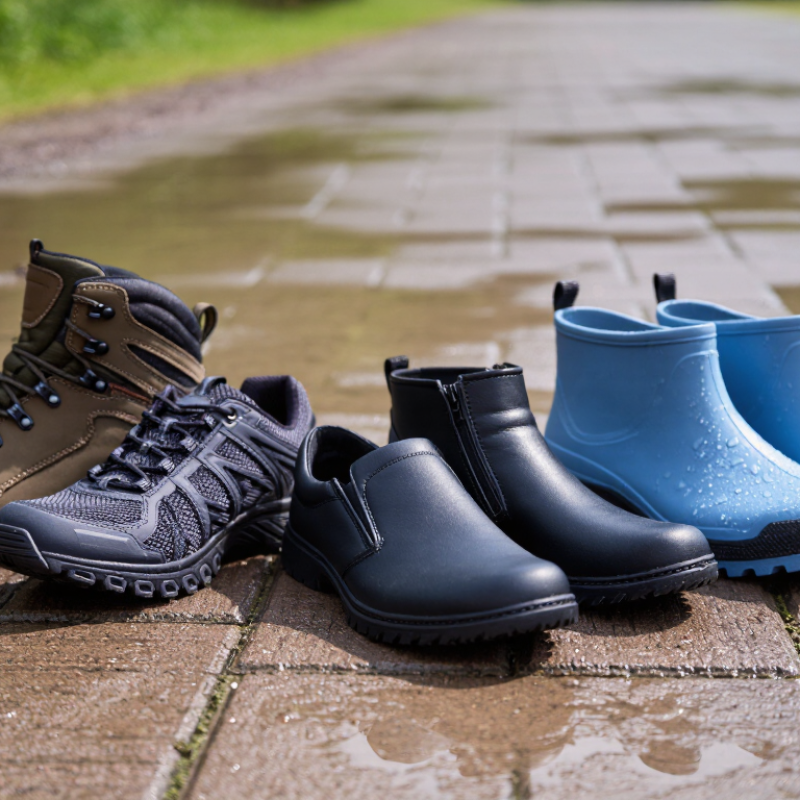
Start with the ground, not the word “waterproof.” A daily commute on wet pavement calls for grip and comfort; a muddy trail needs deeper lugs and a secure fit. For cold slush, consider insulation and a higher cuff. Not just puddles.
Outdoor Industry Association’s 2024 Outdoor Participation Trends Report counted 175.8 million U.S. participants in 2023, or 57.3% of people aged six and older. That broad range of outdoor activities is a reminder: one shoe may not suit every route or season.
For safety footwear, ISO 20345:2021 distinguishes water penetration and absorption of the upper (WPA) from whole-shoe water resistance (WR). Check which protection a shoe claims, and match it to how long and how deeply you expect to encounter water. A short walk through rain differs from hours on a soaked trail.
Look at the outsole on the surfaces you use, and leave room for the socks you actually wear. Fit matters, too. I would still question a shoe that feels sealed but traps sweat; damp socks can come from inside.
A brief test in familiar conditions helps, though it cannot reproduce every storm or puddle.
Compare Waterproof Materials and Membrane Technologies
Waterproof shoes rely on either a barrier film or a tightly woven, treated textile. Microporous membranes block liquid water while allowing some vapor to escape; pore-free polyurethane membranes move vapor through the film by diffusion. The trade-off shows up on a damp hike: a membrane may keep rain out, yet warm feet can still feel clammy. No magic.
Check what the test actually measures. ISO 20344:2021 includes footwear tests for water penetration and absorption, while SATRA TM77 assesses water resistance during flexing. These are more relevant to shoes than a fabric swatch tested alone. For breathability, ASTM E96 reports water-vapor transmission in grams per square meter over 24 hours; higher figures generally mean more vapor passes under that test’s conditions. Test methods differ, so figures from separate reports are not always directly comparable.
Construction matters as much as membrane type. Sealed seams, gusseted tongues, and a snug collar help stop water entering around the barrier. A leather upper may resist brief showers after treatment, but repeated wetting can reduce that protection. I’ve found that a shoe can pass a lab test and still feel damp after a long, fast walk. Choose based on exposure: frequent puddles call for a tested membrane and sealed construction, while dry, mild trails may reward greater airflow. Check the test method, not just the word “waterproof.”
Choose a Suitable Shoe Type, Fit, and Level of Support
Choose waterproof shoes for the ground you actually cover. Low-cut shoes often feel lighter on warm days and well-kept trails. Mid-cut boots can offer more ankle coverage on rocky paths or under a heavier pack. Waterproof linings help in rain and shallow puddles, but water can still enter over the collar. They may also feel warm during fast walks. Fit changes everything.
Try shoes with the socks you plan to wear, preferably later in the day when feet may be slightly swollen. Leave a thumb’s width in front of your toes, and check that your heel stays put on a short incline. Your toes should not press against the front when walking downhill. Small detail. Big difference. Support should match your load and route: a flexible sole may suit easy walks, while rough terrain often calls for a steadier base. Don’t assume the stiffest shoe is best; too much structure can feel tiring. A fitting can seem fine indoors, yet reveal pressure after an hour outside. Walk in them before a long outing, and pay attention to rubbing or numbness. No shoe fixes a poor fit, and waterproofing alone is not a reason to choose one.
Assess Construction, Traction, Breathability, and Durability
How to Choose the Best Waterproof Shoes?
Check how the shoe blocks water, not just what its label promises. A waterproof membrane helps, but exposed seams or a low tongue can still let rain in. Look for sealed seams, a gusseted tongue, and enough room to wiggle your toes. Fit matters. A tight shoe may feel secure at first, then rub during a long walk.
Traction depends on the outsole and the surface you use most. Deep, well-spaced lugs can grip loose ground, while softer, flatter patterns may suit wet pavement. A 2019 randomized trial published in the Scandinavian Journal of Work, Environment & Health reported a 67% lower rate of slip-related compensation claims among food-service workers offered slip-resistant shoes. That result supports traction’s value, but it does not guarantee grip on every surface. Breathability matters too: a waterproof lining can trap heat, especially during brisk walks. Check for moisture-wicking lining and ventilation without assuming either will keep feet dry inside.
Tips: Flex the shoe near the toes and inspect the sole for uneven wear. Let shoes dry fully between uses. Don’t ignore a small hot spot; it may become a blister on a longer route. A very rigid shoe can last longer, but may feel uncomfortable on uneven trails.
Check Sizing, Comfort, and Care Requirements Before Buying
Waterproof shoes should fit your feet, not just the size printed on the box. Try them on late in the day, when feet may be slightly swollen, and wear the socks you expect to use outdoors. Leave a thumb’s width in front of your toes, but check that your heel does not lift with each step. Walk on a firm surface and notice pressure around the sides. Small annoyances rarely disappear on a long hike.
Tips: Check both feet, since they may differ in size. Try stairs or a gentle incline if the store allows it. A snug fit should not feel tight.
Comfort depends on more than cushioning. Consider weight, ankle support, and how warm the lining feels; waterproof materials can trap heat during brisk walks. Ask how the shoes should be cleaned and dried. Some need only a damp cloth, while others may require a suitable treatment to help maintain water resistance. Avoid placing wet shoes beside direct heat, which can damage materials. I once judged a pair by its soft insole alone, and missed how stiff the toe felt after an hour. Test the details that matter for your usual routes.
How to Choose the Best Waterproof Shoes
Check sizing, comfort, and care requirements before buying.
Suggested checklist priorities are editorial ratings on a 1–5 scale, not survey or laboratory results. Try shoes on with the socks you plan to wear, check toe room and heel security, and confirm that the waterproof construction and care instructions suit your intended use.