
Top 10 Tactical Leg Holsters for Global Buyers
Choosing the right Tactical Leg Holsters requires more than comparing prices or appearance. Global buyers often face different climates, body shapes, uniforms, and workplace requirements. A model that feels stable on a dry training range may shift during a humid commute. Another may look durable but create pressure behind the knee after several hours.
This guide examines ten Tactical Leg Holsters through practical criteria. We consider material strength, strap adjustment, retention, weight distribution, ventilation, stitching, and compatibility with permitted equipment. Comfort matters. So does quiet movement. Clear product information matters too, especially when buyers cannot inspect the holster in person. Measurements, return policies, warranty terms, and regional compliance should be checked before purchase.
Jeff Cooper, a respected firearms instructor and safety authority, said, “Safety is something that happens between your ears, not something you hold in your hands.” That principle remains relevant here. A well-designed holster cannot replace careful judgment, proper training, or responsible ownership. It should support secure, lawful equipment transport without restricting normal movement.
There is no perfect choice.
Some buyers may prefer a lightweight platform, while others need stronger support for extended field work. Our ranking is useful, but not absolute. Personal fit can change everything. We also acknowledge a limitation: long-term comfort is difficult to judge from specifications alone. Therefore, each selection balances documented features with realistic user concerns, helping international shoppers make a more informed and responsible decision.
Understanding Tactical Leg Holsters and Their Main Uses
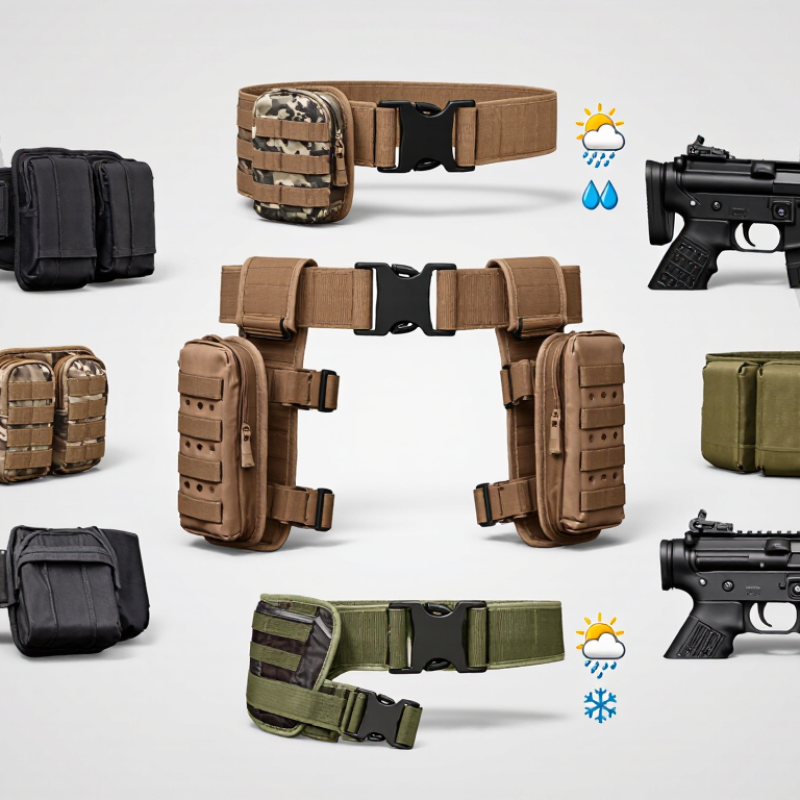
A tactical leg holster is a thigh-mounted carrier designed to keep essential equipment accessible while leaving the waist less crowded. Its position can improve reach when a backpack, protective vest, or tool belt is already full. Common uses include carrying a flashlight, radio, first-aid pouch, navigation device, or other lawful field tools. The best choice depends on the user’s task, clothing, and movement pattern.
Fit matters more than appearance. A stable holster should sit high enough to avoid knee movement and low enough to remain reachable. Adjustable straps should feel firm without restricting circulation. I recommend walking, climbing stairs, and sitting before regular use. Test it with the clothing worn outdoors. Small changes can prevent rubbing, swinging, and accidental drops.
Retention is equally important. A secure closure protects equipment during bending or uneven ground. Breathable materials may help in hot climates, while reinforced stitching supports frequent use. However, lighter materials can wear sooner. That trade-off is easy to overlook. Regularly inspect buckles, seams, and attachment points. Replace damaged parts before they affect performance. No leg holster suits every body or mission. In practice, comfort may require compromising on storage capacity, and that compromise deserves careful thought.
Top 10 Tactical Leg Holsters for Global Buyers - Understanding Tactical Leg Holsters and Their Main Uses
| No. | Holster Configuration | Typical Construction | Retention Level | Typical Weight | Adjustable Thigh Range | Main Use | Global Buyer Considerations |
|---|---|---|---|---|---|---|---|
| 1 | Universal Drop-Leg Holster | Nylon or polyester platform with adjustable straps and a universal pistol pouch | Basic to moderate | 250–450 g | 40–70 cm | Training, outdoor activities, airsoft and general utility use | Affordable and widely adaptable, but exact firearm fit and trigger coverage must be checked carefully |
| 2 | Low-Ride Belt-Mounted Holster | Polymer or reinforced nylon mounting panel positioned below the belt line | Moderate to high | 180–350 g | Usually belt-dependent | Duty-style carry when a full thigh platform is not required | More stable during walking than a low-hanging rig; confirm belt width compatibility, commonly 38–50 mm |
| 3 | MOLLE-Compatible Thigh Platform | Laser-cut laminate or woven nylon platform with modular attachment rows | Moderate to high | 300–550 g | 45–75 cm | Users who need space for magazines, medical pouches or utility accessories | Modular layout is useful for different missions, but additional pouches increase weight and bulk |
| 4 | Rigid Polymer Drop-Leg Holster | Molded thermoplastic shell with nylon straps and a reinforced mounting platform | High | 300–500 g | 42–72 cm | Field work, law-enforcement training and active outdoor movement | Offers better shape retention and impact resistance; verify shell compatibility with the specific firearm model |
| 5 | Modular Quick-Release Thigh Holster | Rigid shell with a detachable locking interface and adjustable thigh platform | High | 350–600 g | 45–75 cm | Users who switch between belt, vest and leg mounting systems | Check that replacement mounting interfaces are available in the destination market |
| 6 | Universal Elastic Thigh Holster | Elastic fabric body with hook-and-loop adjustment and a covered trigger area | Basic to moderate | 150–300 g | 38–68 cm | Lightweight recreational use, hiking and low-profile equipment carriage | Comfortable and compact, but elastic materials may stretch under heavy equipment or prolonged use |
| 7 | Ambidextrous Tactical Leg Holster | Reversible nylon or polymer body designed for left- or right-side mounting | Moderate | 220–420 g | 40–70 cm | Shared equipment, training environments and users who require side flexibility | Confirm that the release mechanism and sight channel remain accessible on both sides |
| 8 | Cold-Weather Leg Holster | Insulated or weather-resistant nylon platform with glove-friendly fastening hardware | Moderate to high | 300–550 g | 45–80 cm | Winter operations and use over insulated clothing or tactical trousers | Measure thigh circumference over the clothing layer and inspect stitching for moisture resistance |
| 9 | Hot-Climate Ventilated Leg Holster | Breathable mesh backing combined with lightweight nylon or polymer components | Moderate to high | 200–400 g | 40–72 cm | Tropical, desert and high-temperature outdoor environments | Breathability improves comfort; look for corrosion-resistant hardware and quick-drying materials |
| 10 | Heavy-Duty Padded Leg Holster | Padded nylon platform with reinforced webbing, durable buckles and accessory points | High | 450–750 g | 48–82 cm | Extended field operations where comfort, stability and accessory capacity are priorities | Provides more support but adds bulk; review shipping dimensions, cleaning requirements and replacement buckle availability |
Note: Weight and thigh ranges are typical industry ranges for comparable configurations, not guaranteed specifications. Always verify exact firearm compatibility, trigger coverage, retention performance, mounting dimensions, local regulations and import requirements before purchase.
Related Posts
-
10 Tips for Choosing Tactical Leg Holsters
-
The Future of Tactical Leg Holsters Redefining Comfort and Efficiency
-
Quality Crafted Men's Shoulder Bags: Your Gateway to Global Style from China's Leading Factory
-

7 Compelling Reasons Tactical Leg Holsters Are Essential for Every Outdoor Enthusiast
-

How to Choose the Best Quick Rucksacks for Every Adventure
-
The Rise of Women's Uniform Pants Transforming Workplace Fashion Trends