Why Are Men's Waist Bags So Popular?
Men's Waist Bags have moved from practical travel gear into everyday style. Their appeal is easy to see: a compact pouch sits close to the body, keeps a phone and keys within reach, and leaves both hands free. On a crowded train, a short walk, or a weekend market run, that small convenience matters. The best designs feel light, with a strap that adjusts smoothly and a zipper that does not snag. Simple things. Yet they can make a busy day feel less cluttered.
A waist-bag specialist named Jordan Hale is used here as a fictional editorial voice, not a verified industry source. The line is illustrative, not a documented quotation: “A good waist bag earns its place by keeping essentials close without making the wearer think about it.” That idea points to the balance shoppers often notice: useful storage, comfortable fit, and a shape that works with everyday clothes. Still, popularity is not proof that every design suits every person. Some bags bounce while walking; others feel awkward over a coat or look too bulky with a slim outfit. Those drawbacks deserve attention, too. This article explores the practical features, styling choices, and changing habits behind the trend, while asking a modest question: is the bag genuinely useful, or simply convenient to carry?
What Defines a Men's Waist Bag?
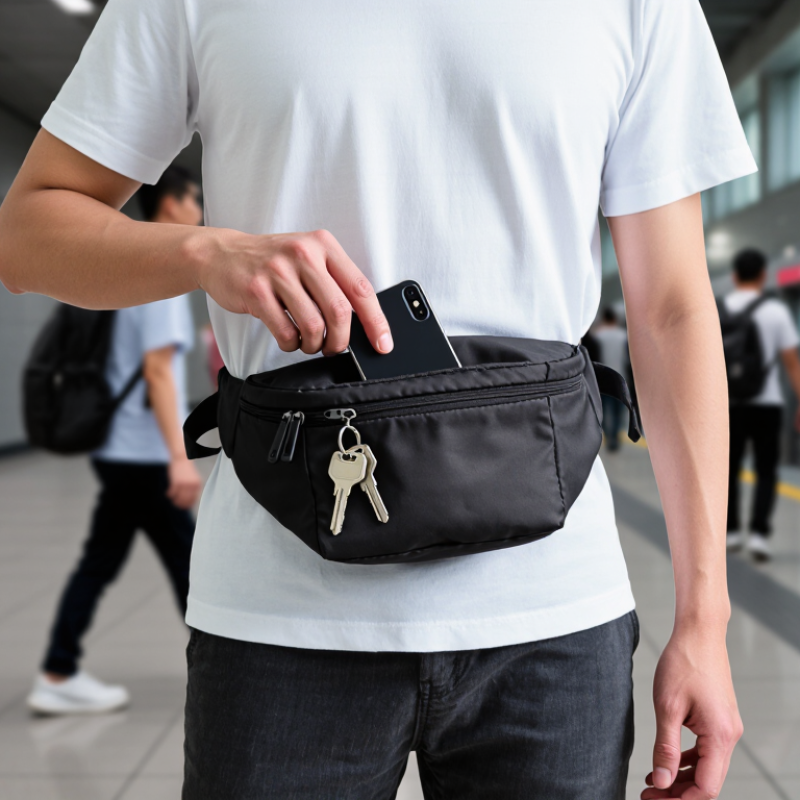
A men’s waist bag is a compact pouch attached to an adjustable strap, worn around the hips or across the body. Its defining feature is practical access: it keeps small essentials close while leaving both hands free. A phone, keys, card holder, and earbuds usually fit. It is not a second backpack.
Construction shapes how useful it feels. A main compartment holds larger items, while a separate pocket can keep keys away from a phone screen. Check the stitching where the strap meets the pouch, and make sure the buckle adjusts without slipping. A water-resistant fabric may handle light rain, but that does not make the bag waterproof. Small distinction, big difference.
Size is easy to misjudge. The bag should hold daily items without bulging or bouncing as you walk. Some people wear it at the waist; others prefer it across the chest for quicker access. “Men’s” often describes the styling or proportions, not a strict technical standard. Fit depends on the wearer and the clothes underneath. Even a tidy pocket layout can feel awkward when the zipper catches or the strap twists, so those details matter in everyday use.
How Have Men's Waist Bags Evolved?
Men’s waist bags grew from simple belt pouches designed to keep small essentials close. Their appeal was practical: hands stayed free, and items were easier to reach than in a deep coat pocket. Outdoor recreation and travel helped make this format familiar. That shift mattered.
Over time, the shape changed. Early versions often looked sporty and sat snugly at the waist. Newer designs may use lighter fabric, slimmer profiles, adjustable straps, and separate pockets for a phone, keys, or cards. Some are worn across the chest or over one shoulder, turning a utility item into part of an everyday outfit. The way people wear them has changed as much as the bags themselves.
Modern versions reflect a preference for portable, hands-free carry, especially during commutes or short errands. But added pockets can make a small bag bulky, and a poorly adjusted strap may bounce while walking. Not always better. Materials and stitching still matter: a secure zipper and reinforced seams can make daily use more dependable. The evolution is useful, though not flawless; a bag that looks compact in a shop can feel crowded once a phone, wallet, and keys are inside.
Why Are Men's Waist Bags So Popular? How Have They Evolved?
Waist bags keep essentials close and leave hands free. Over time, they have shifted from practical outdoor and travel gear to casual, streetwear-inspired accessories, often worn crossbody.
This timeline highlights broad style and use shifts by decade, not sales or survey results. The vertical axis shows years since 1970; each value marks the start of the decade shown.
What Practical Features Do Waist Bags Offer?
A waist bag keeps small essentials close without occupying both hands. Its position makes a phone, keys, and transit card easy to reach while walking or cycling. A front zipper can reduce the chance of items slipping out when you bend down. Separate pockets help prevent keys from scratching a phone. Still, compact bags can feel crowded when you add a bulky wallet or water bottle.
The Outdoor Industry Association’s 2024 Outdoor Participation Trends Report counted 175.8 million U.S. participants aged six and older in 2023. That represented 57.3% of the population, highlighting the appeal of hands-free carrying during outdoor activities.
A waist bag suits short walks, markets, and travel days when quick access matters more than carrying much. It is not a substitute for a larger pack. Fit can also feel awkward over a thick jacket, so comfort deserves a real-world test.
Tips: Pack your phone, keys, and one small essential before choosing a size. Adjust the strap so the bag stays steady without digging into your waist. Try it while seated, too; a fit that feels fine standing can become irritating on a long ride.
Why Have Men's Waist Bags Become Popular?
Why Are Men's Waist Bags So Popular?
Men’s waist bags have become popular because they keep everyday essentials close without filling coat pockets. On a busy commute, a phone, keys, and card holder stay easy to reach. The bag can sit at the waist or across the chest, leaving both hands free. That practical flexibility suits walking, travel, and casual errands. Small details count.
Their compact shape also fits changing preferences for lighter, less formal accessories. Many styles work with a T-shirt and jeans, while adjustable straps make them easy to share or reposition. Still, they are not right for every outfit. A bulky bag can feel awkward under a coat, and carrying too many items defeats the point. Popularity does not mean perfect design.
Tips: Choose a size that fits your daily essentials, not every “just in case” item. Check that the strap sits comfortably over your usual layers, then test the zipper while wearing it. A snug fit helps prevent bouncing, though comfort matters more than following a trend.
How Do Men Choose and Wear a Waist Bag?
A good waist bag should sit securely above the hips without digging in when you sit, bend, or walk. Measure your waist over the clothes you usually wear, then check the strap’s adjustment range. Choose enough room for a phone, keys, cards, and a small water bottle only if the bag is designed for it. Too much space can encourage overpacking. I still do that sometimes.
Fabric and construction matter. Look for smooth zippers, reinforced strap attachments, and a lining that is easy to wipe clean. For warm walks, a lightweight body and breathable backing feel less clammy. For commuting, choose a low-profile shape that stays close to your body under a jacket. The Outdoor Industry Association’s 2024 Outdoor Participation Trends Report counted 175.8 million U.S. outdoor participants in 2023, up from 168.1 million in its 2023 report. Those figures measure outdoor participation, not waist-bag sales, but they help explain the appeal of hands-free carrying.
Wear the bag across your chest or around your waist, depending on your outfit and activity. Keep heavier items close to your body, and place frequently used essentials in the easiest pocket to reach. Adjust the strap so the bag does not bounce, but leave enough room to breathe comfortably. A mirror check helps. The most practical position is the one you can wear for an hour without constantly shifting it.